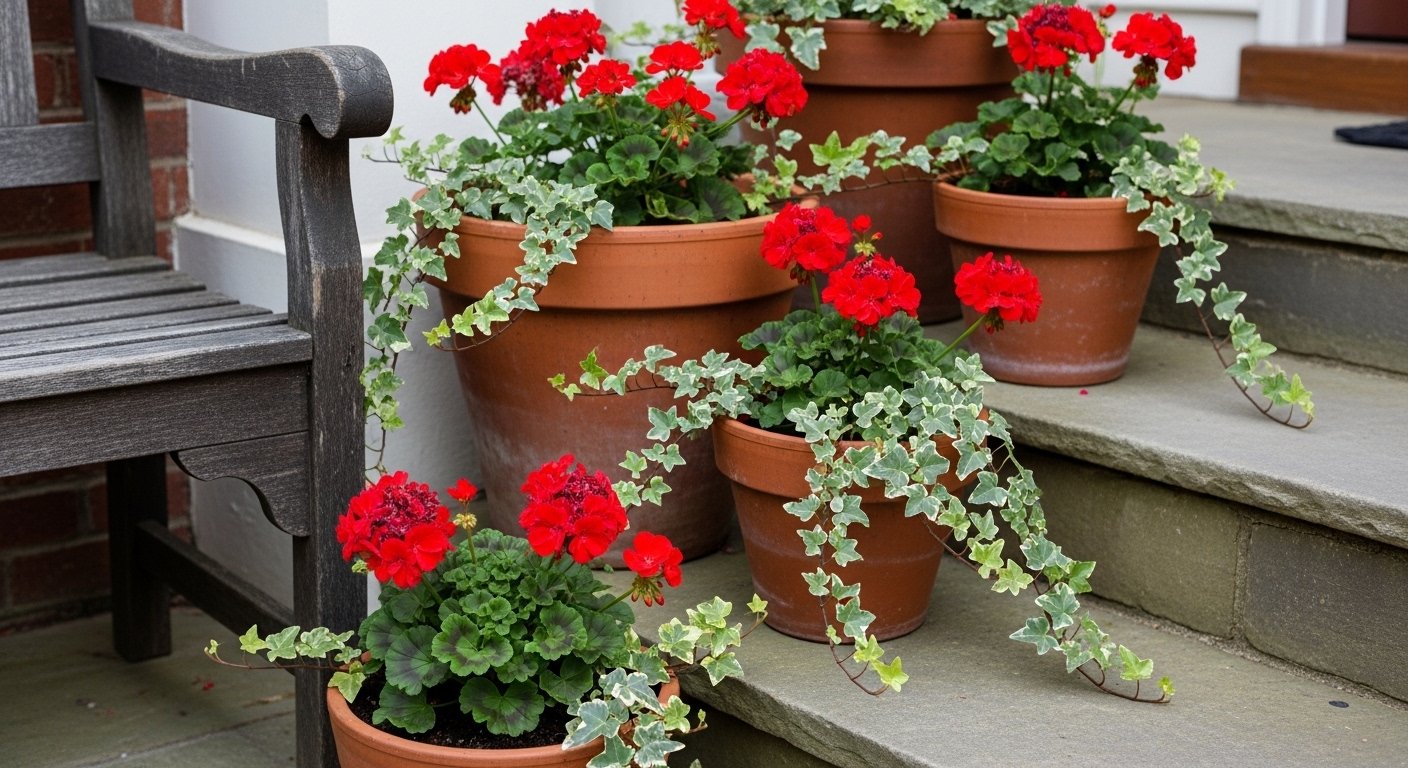
I used to cram all my plants into one big pot and wonder why the porch looked flat. Over time I learned spacing, height, and texture matter more than fancy choices.
These ideas are from wet summers, dry spells, mistakes and small wins. You can copy any look and make it yours.
21 Cozy Front Porch Flower Pots For Instant Curb Appeal
These 21 realistic, easy-to-copy ideas will give your porch curb appeal without fuss. I include simple setups, low-maintenance options, and a few honest mistakes I made along the way.
1. Classic Terracotta Cluster for Warmth
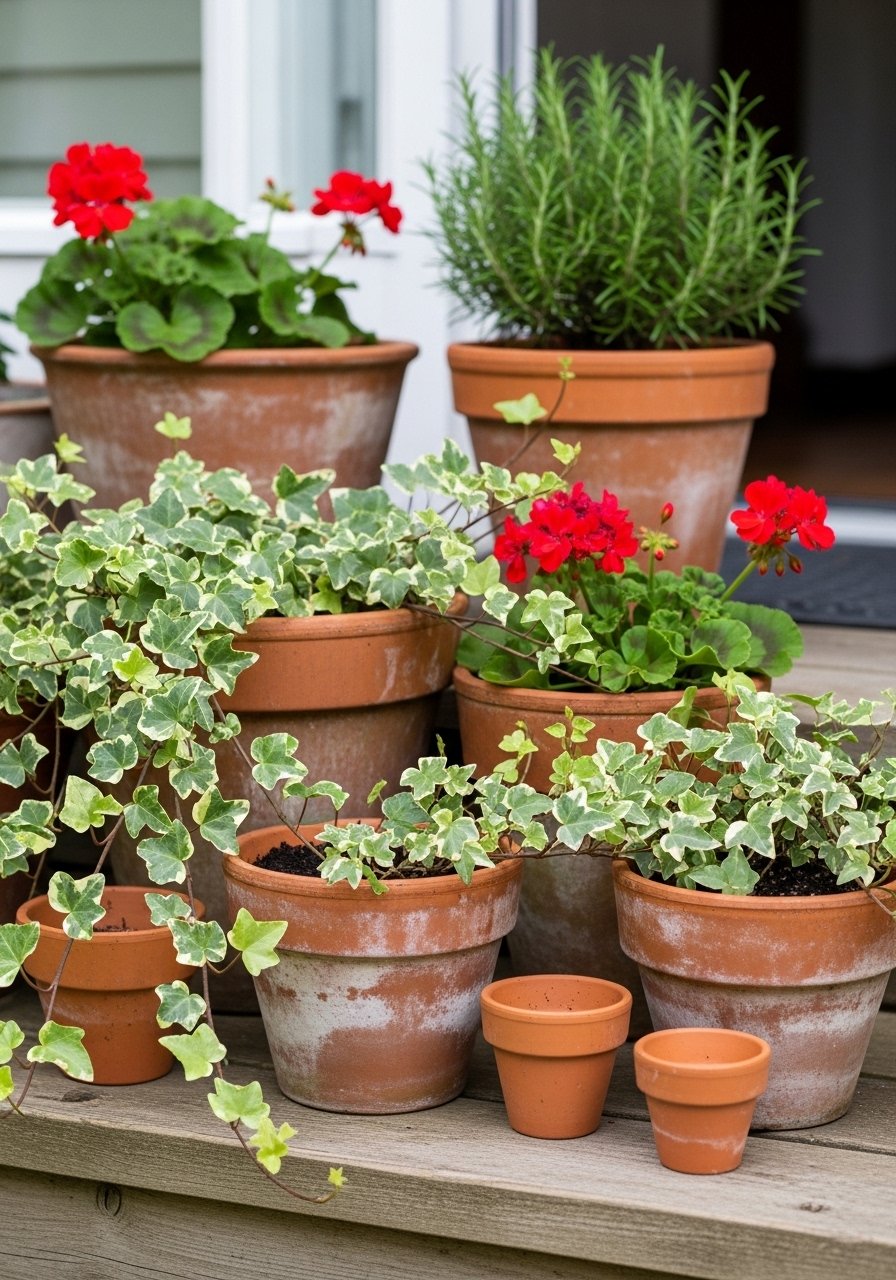
I started with three mismatched terracotta pots and finally understood scale. The warm clay ties the whole entry together even when blooms aren’t spectacular. I once planted only one big pot and it looked lonely; groupings feel intentional.
I mix tall, medium and trailing plants so the arrangement reads as a small vignette. In late season, dried seedheads still look good.
What to watch: avoid wet soil sitting in shallow terracotta—use saucers or lift pots slightly.
What You’ll Need for This Look
- Terracotta planter set (10-12 inch)
- All-purpose potting mix, outdoor 8 qt
- Round saucers for terracotta pots
2. Tall Modern Black Planters for a Clean Entrance
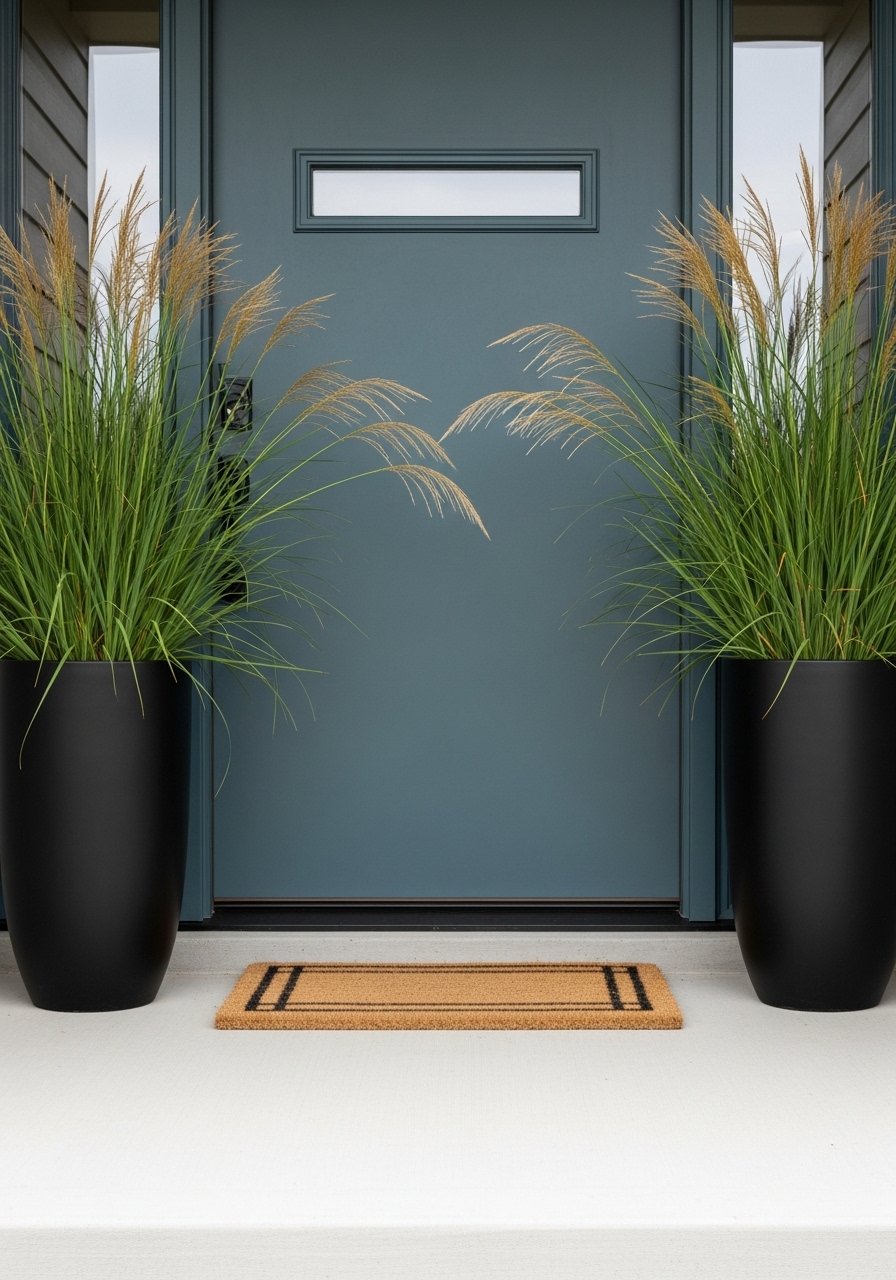
I bought cheap skinny planters once and regretted the wobble. Upgrading to sturdy tall black planters made the entry feel framed and modern. I use narrow shapes to avoid blocking the door but still add height.
Plant with ornamental grass and a contrasting lower groundcover. It looks crisp with minimal fuss, and guests notice the balance more than the individual plants.
Tip: heavier planters need drainage holes and a liner to keep soil from washing away.
What You’ll Need for This Look
3. Layered Container Planting That Makes a Porch Feel Full
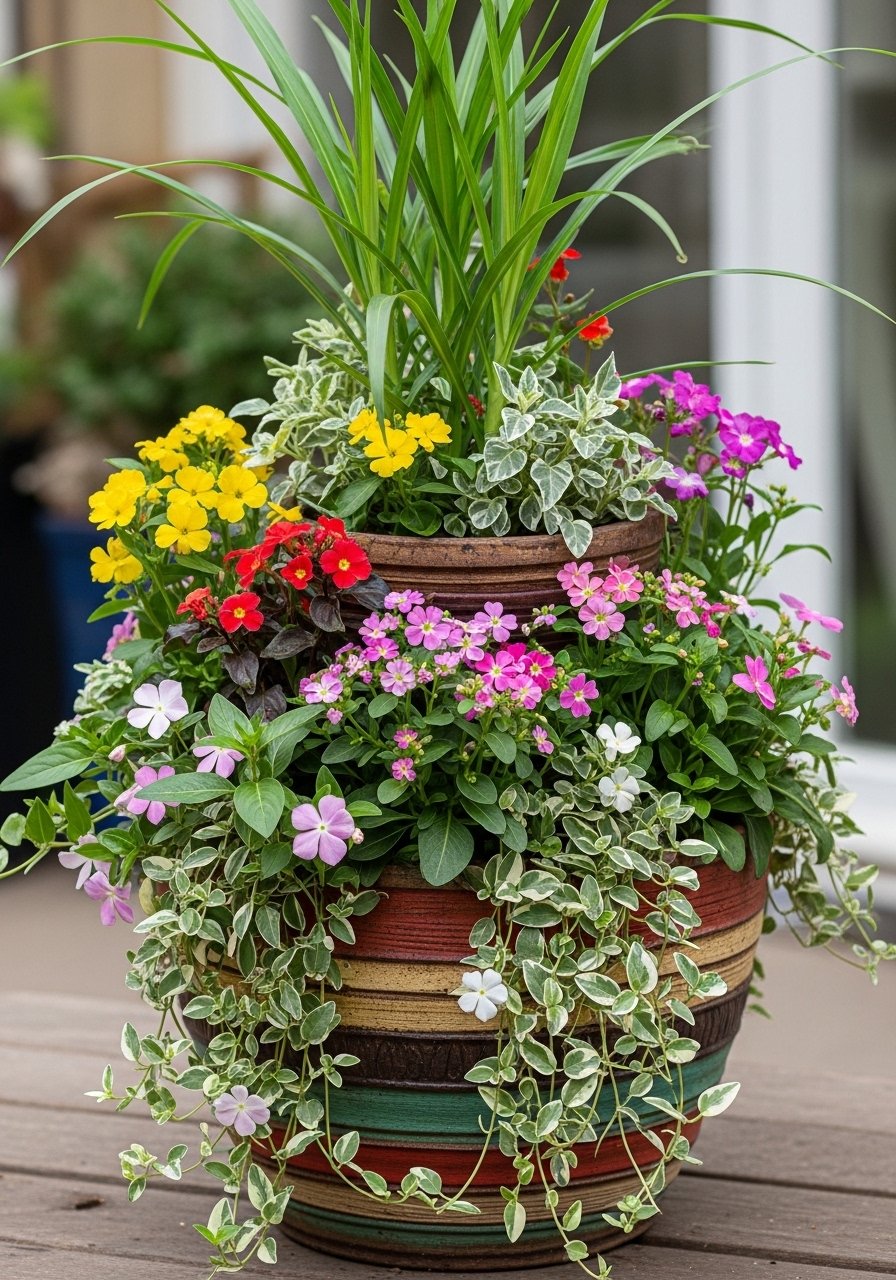
I learned layering by accident when a single coleus outgrew a pot—adding lower plants instantly filled the void. I plant a thriller (tall), filler (bushy blooms), and spiller (trailing) in every large pot. It reads like a tiny garden.
This approach hides bare soil and looks deliberate even if you’re using annuals. I rotate the middle plants seasonally to keep it fresh.
Avoid tiny pots for layering; you need room for roots to avoid overcrowding.
What You’ll Need for This Look
4. Hanging Baskets Over the Rail for Vertical Interest
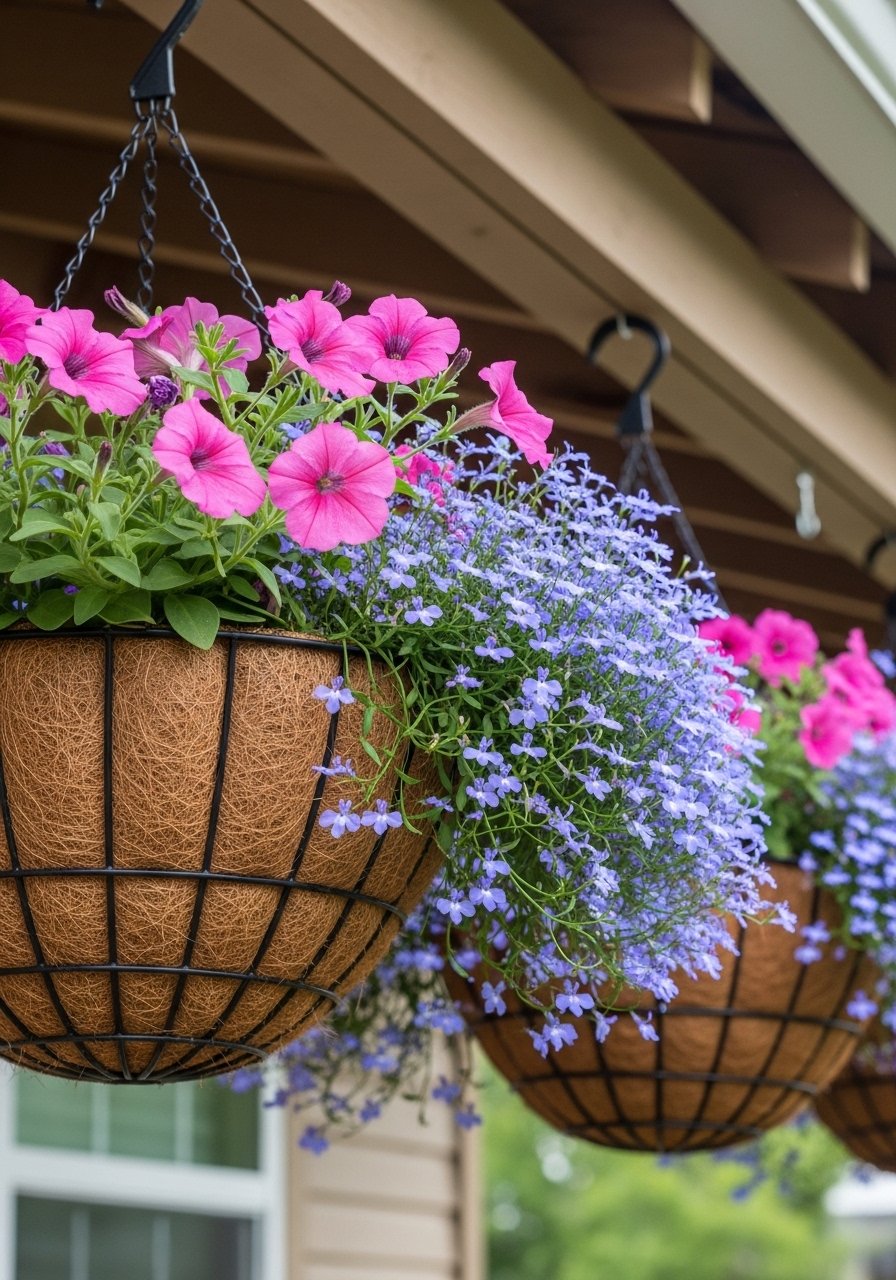
I used to dread watering hanging baskets, but a good liner and lightweight mix made them manageable. Hanging baskets draw the eye up and make a small porch feel layered and cozy.
Place a mix of trailing flowers and a center filler. I learned to check the hooks yearly—one snapped after heavy snow.
Use chains that allow you to lower the basket for watering. It saves back pain and forgotten plants.
What You’ll Need for This Look
- Metal hanging baskets (10-12 inch)
- Coco liners for hanging baskets
- Trailing petunia/flower mix plugs
5. Rustic Wooden Box with Herbs for Smells and Use
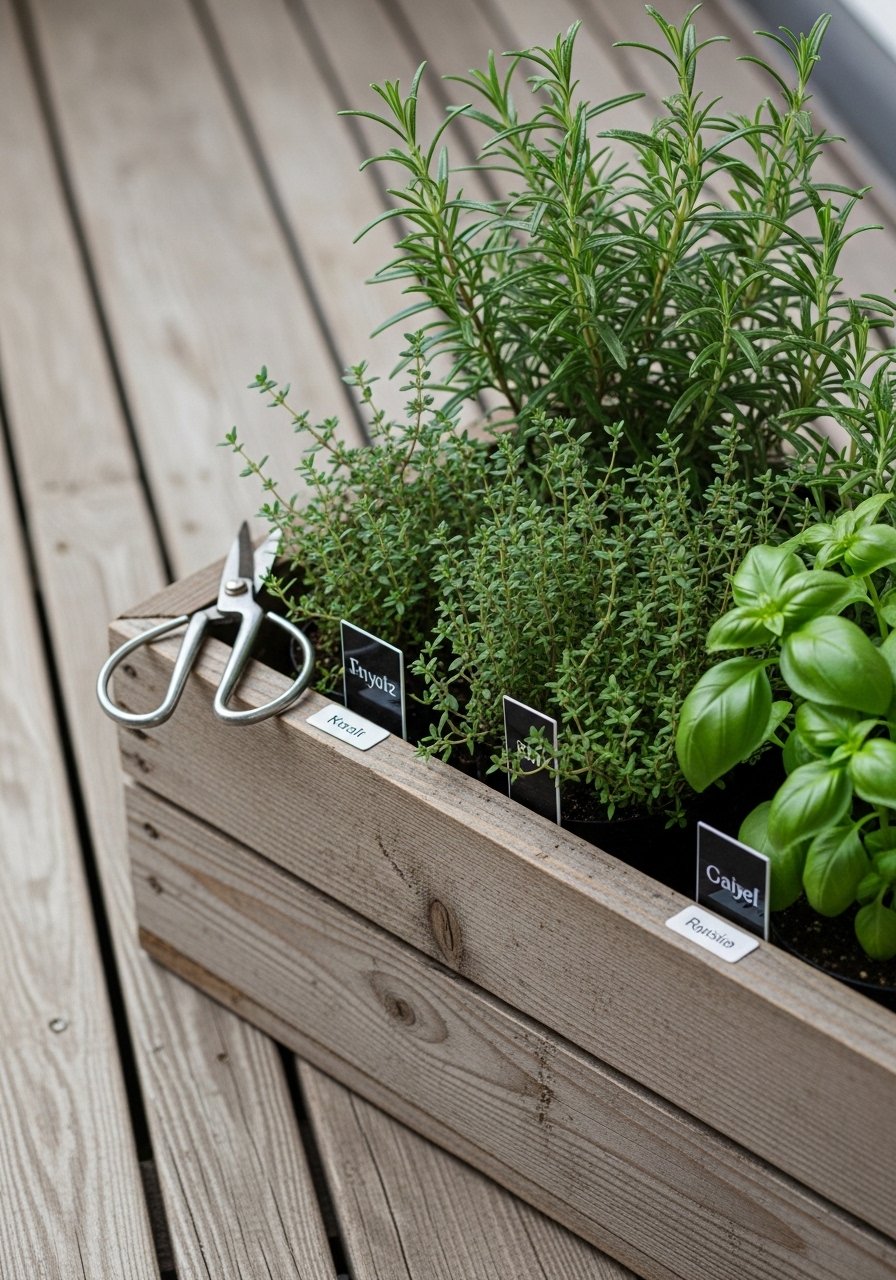
I built a shallow wooden box years ago and kept herbs by the door. The scent when you brush past is immediate curb appeal. I overplanted at first and the thyme choked out the basil—so space herbs properly.
This is practical: snip for dinner, and the box looks alive. Choose a rot-resistant wood or a lined box for longer life.
Keep an eye on summer water—herbs in shallow soil dry fast.
What You’ll Need for This Look
6. Evergreen Winter Pots That Stay Cozy Year-Round
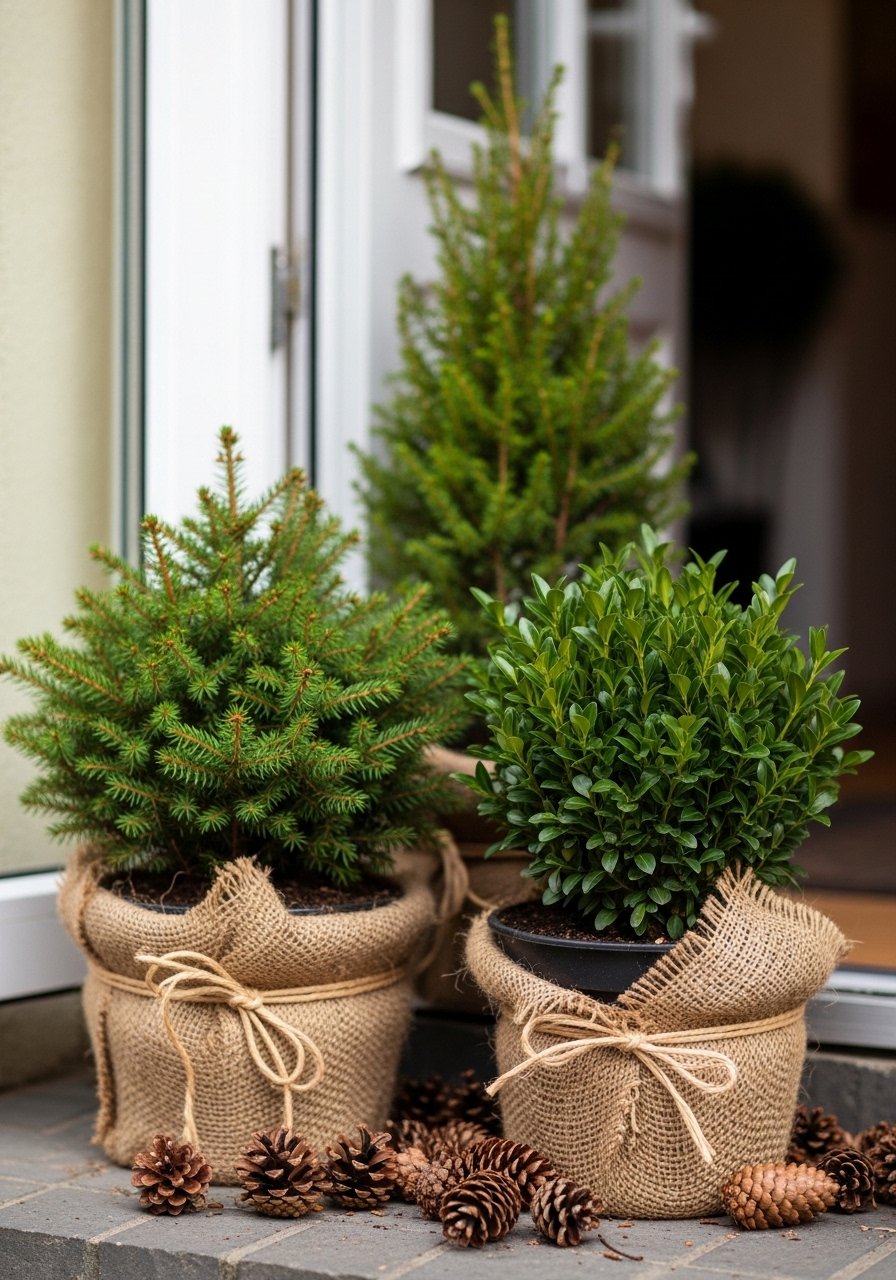
I thought pots needed flowers year-round until winter taught me otherwise. A pair of evergreens gives structure and curb appeal when everything else is brown. I once wrapped them too tightly with burlap and they steamed in warm spells—looser wraps are better.
Mix evergreen heights and tuck in seasonal touches like pinecones or a ribbon. They need less watering but more attention to wind exposure.
Use heavier pots so they don’t tip in storms.
What You’ll Need for This Look
7. Step-By-Step Pots That Lead the Eye Upward
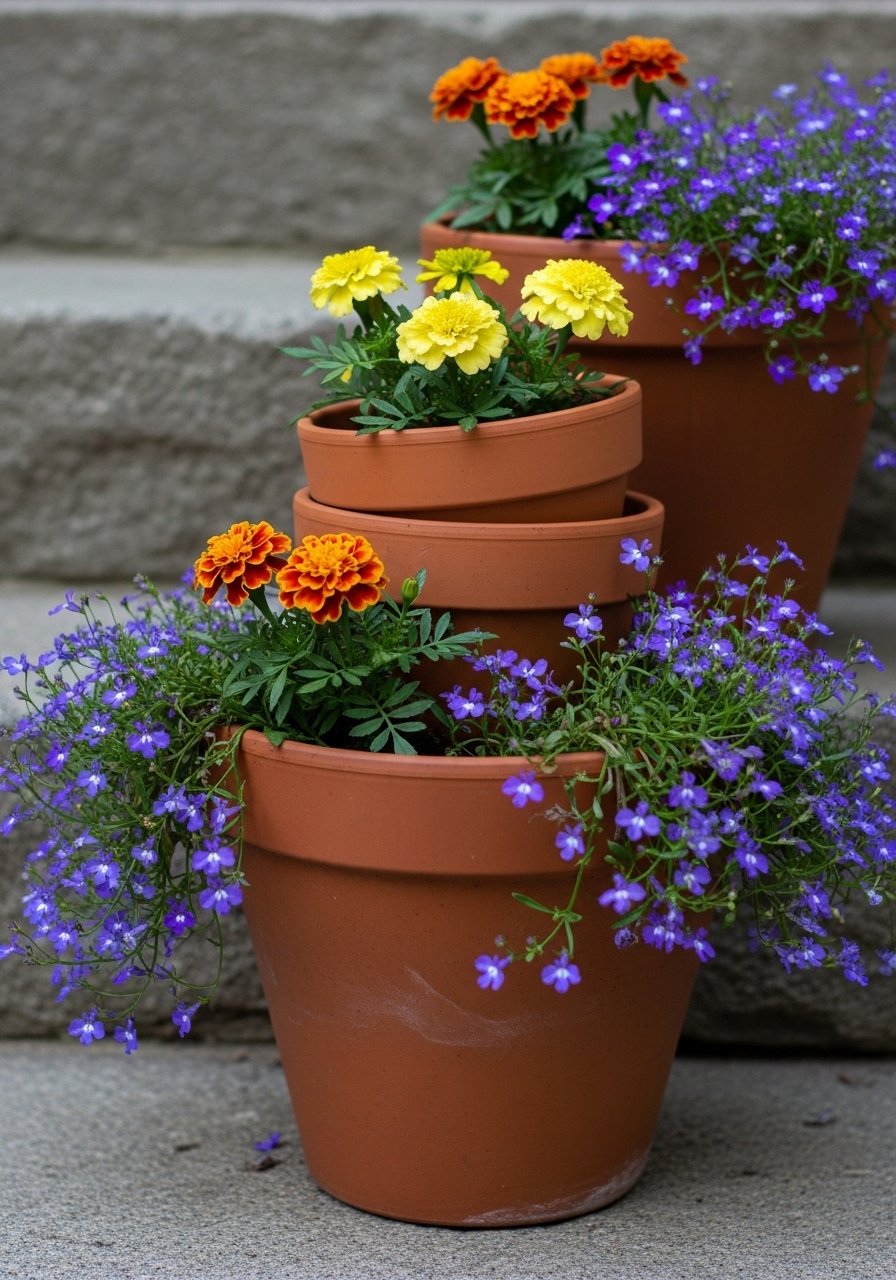
I started lining steps with identical pots and it looked repetitive. Staggering sizes and alternating colors made each step pop. I planted marigolds and low spillers so the eye naturally moves up toward the door.
This layout helps with narrow porches where you can’t place wide planters. I once blocked half the step—measure before you place pots.
Keep heavier pots on lower steps for safety.
What You’ll Need for This Look
8. Low-Maintenance Succulent Bowl for Sunny Porches
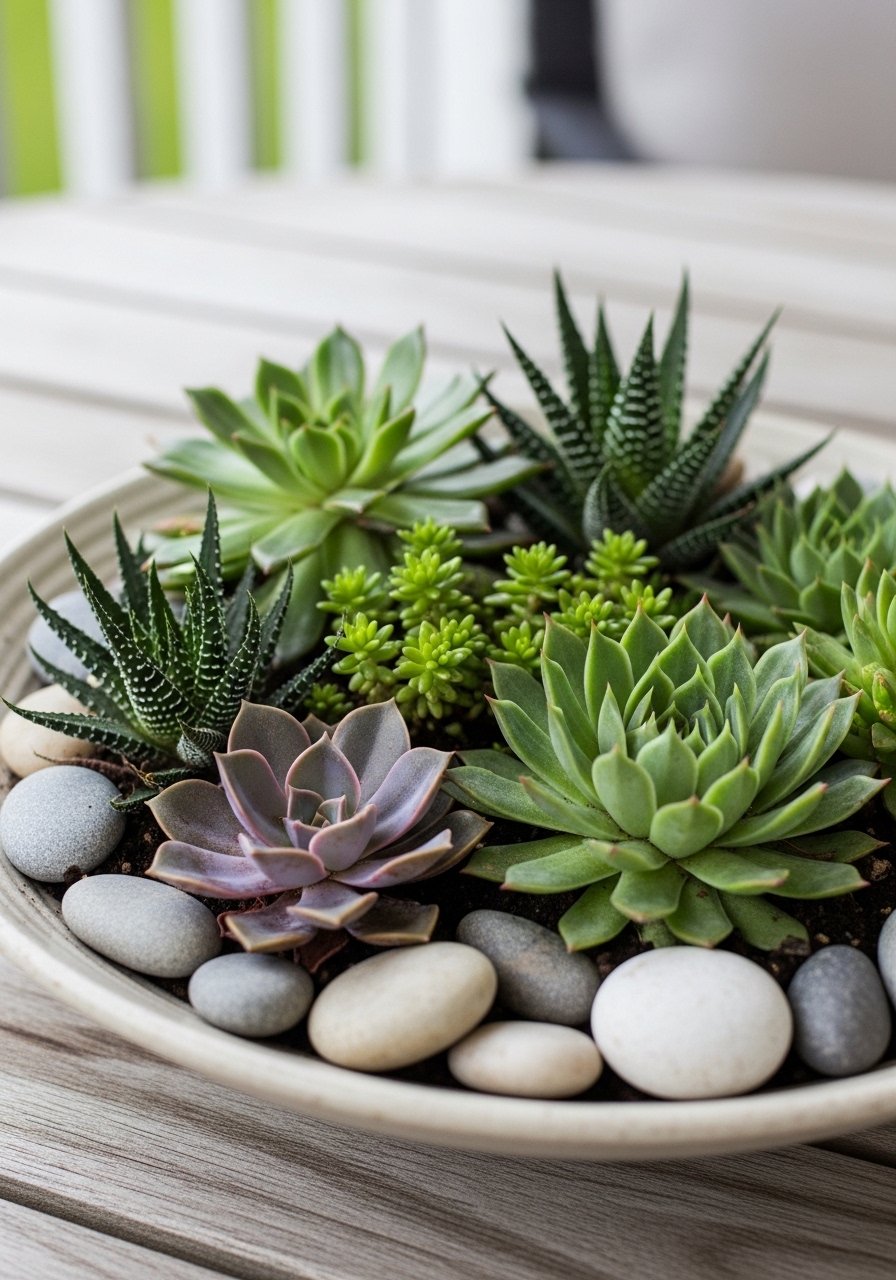
I tried a succulent bowl once with a deep pot and constant rot followed. Switching to a shallow, well-draining bowl fixed it. Succulents create a neat, modern look and survive my inconsistent watering.
I mix textures—rosettes, spiky, and trailing sedum—for interest. Keep them in morning sun and sheltered afternoons if you have a hot climate.
If one rots, remove it fast to protect the others.
What You’ll Need for This Look
9. Cottage-Style White Pots with Mixed Perennials
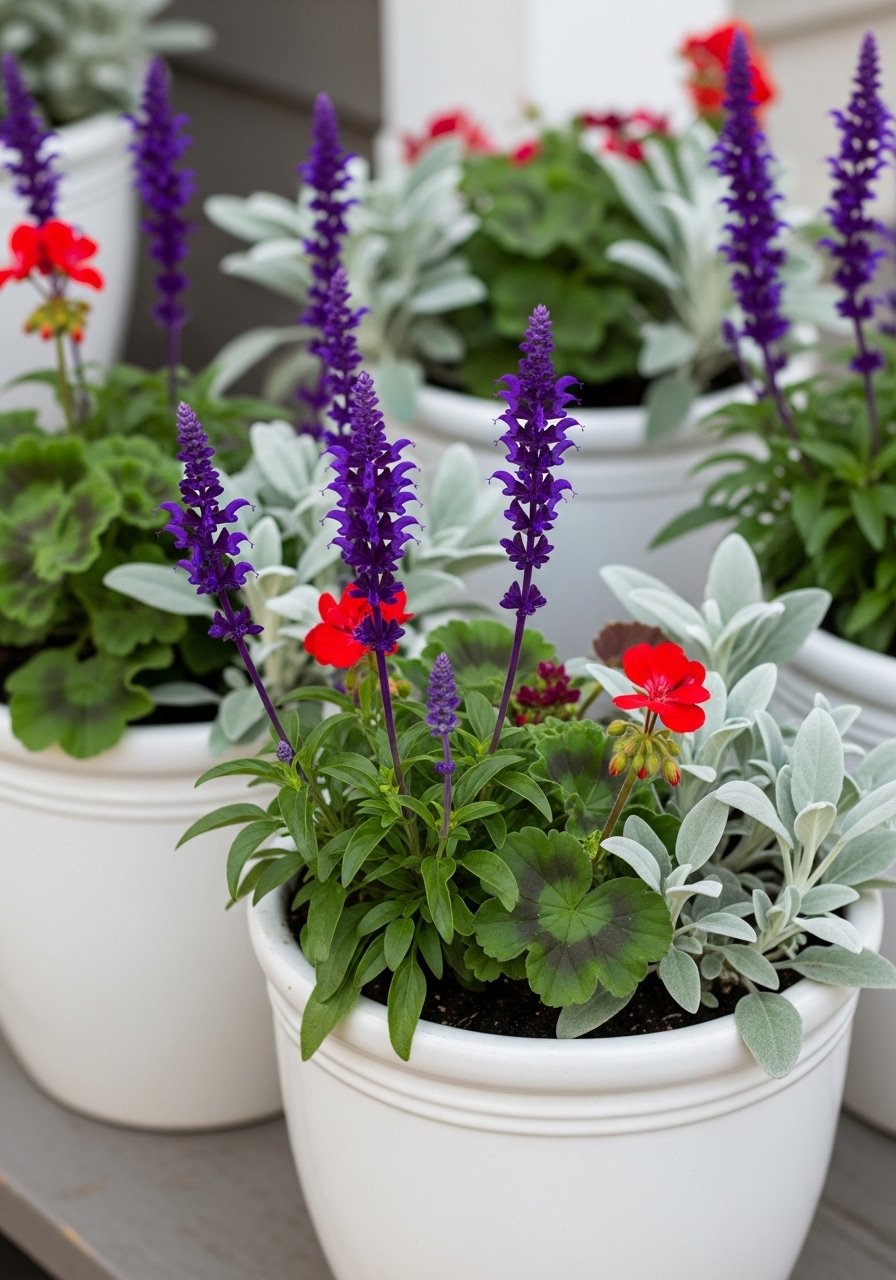
I painted some old pots white and was surprised how much lighter the porch felt. White containers allow plant colors to pop without clashing. I favor hardy perennials so the pots feel established year after year.
I let lamb’s ear spill over the edge for a soft look. One mistake: I used thin ceramic that cracked in a freeze—thicker or frost-proof pots last.
Space plants for growth; perennials need room to fill without crowding.
What You’ll Need for This Look
10. Pollinator Pot with Bee-Friendly Flowers
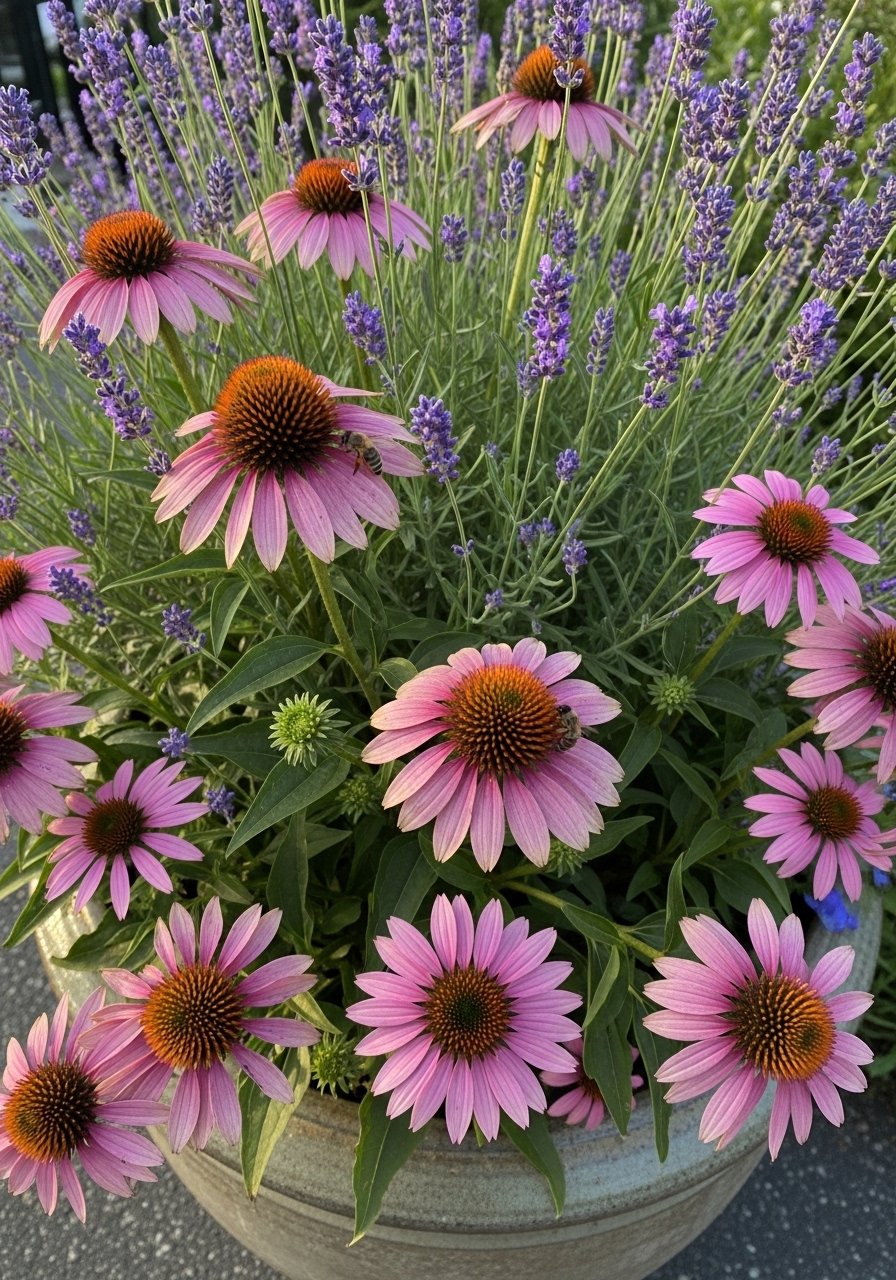
I planted a pollinator pot and got constant visitors—bees, butterflies, and hummingbirds. Coneflowers, lavender, and salvias are dependable and look full through summer. I once planted a crowded mix and the butterflies avoided it; better spacing invites visits.
This pot makes the porch feel alive in a tactile way. Be mindful of where kids and pets pass to avoid too many prickly stems.
Deadhead sparingly; many pollinators prefer seedheads later in season.
What You’ll Need for This Look
11. Mismatched Vintage Pots for a Collected Look
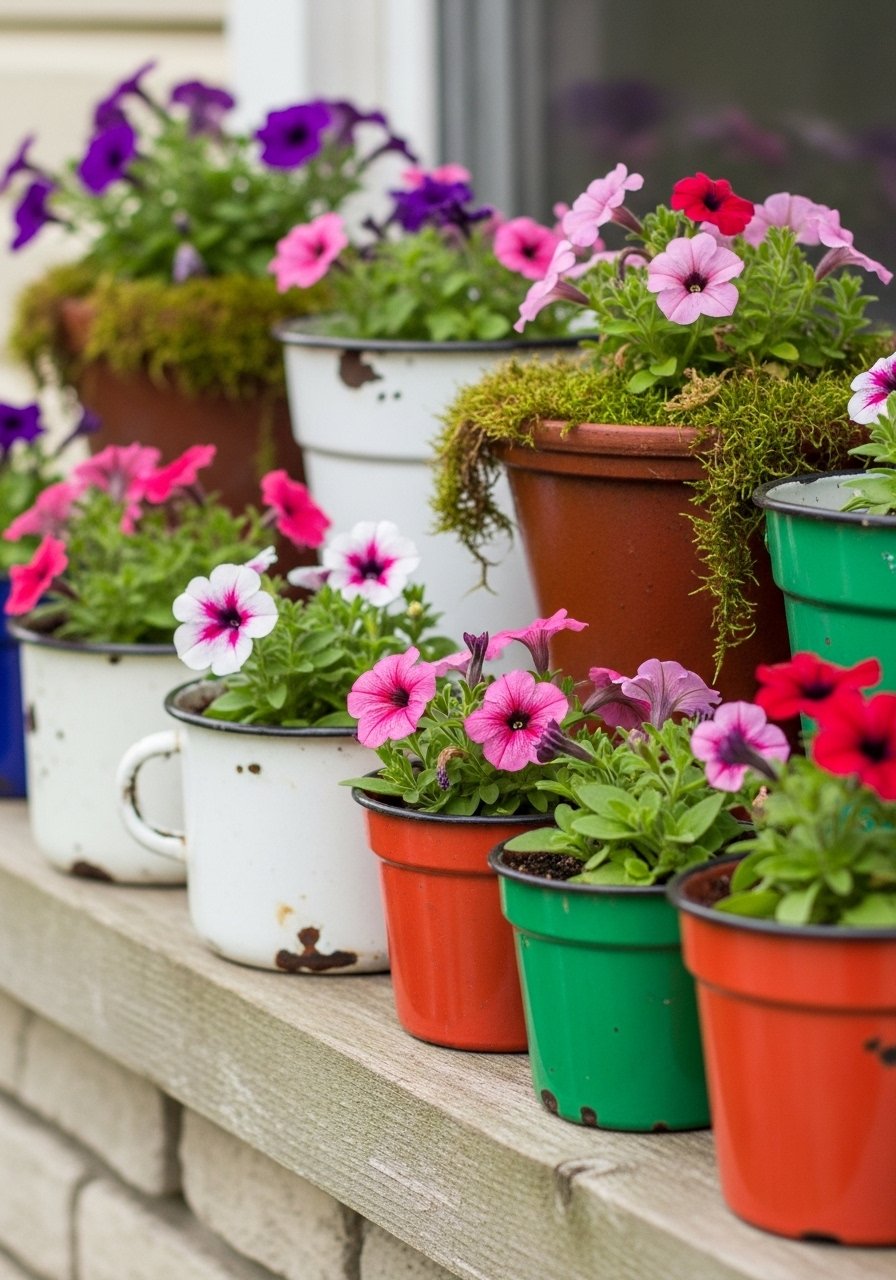
I picked up mismatched pots at flea markets and stacked them by the door. The collected look feels warm and personal. I learned to seal rusty inside edges so soil didn’t stain the porch.
Varied textures—metal, enamel, clay—create charm without trying too hard. Plant bright, forgiving annuals for a casual, budget-friendly statement.
Group at least three so the display reads intentional, not accidental.
What You’ll Need for This Look
12. Bold Foliage Pots That Work Without Flowers
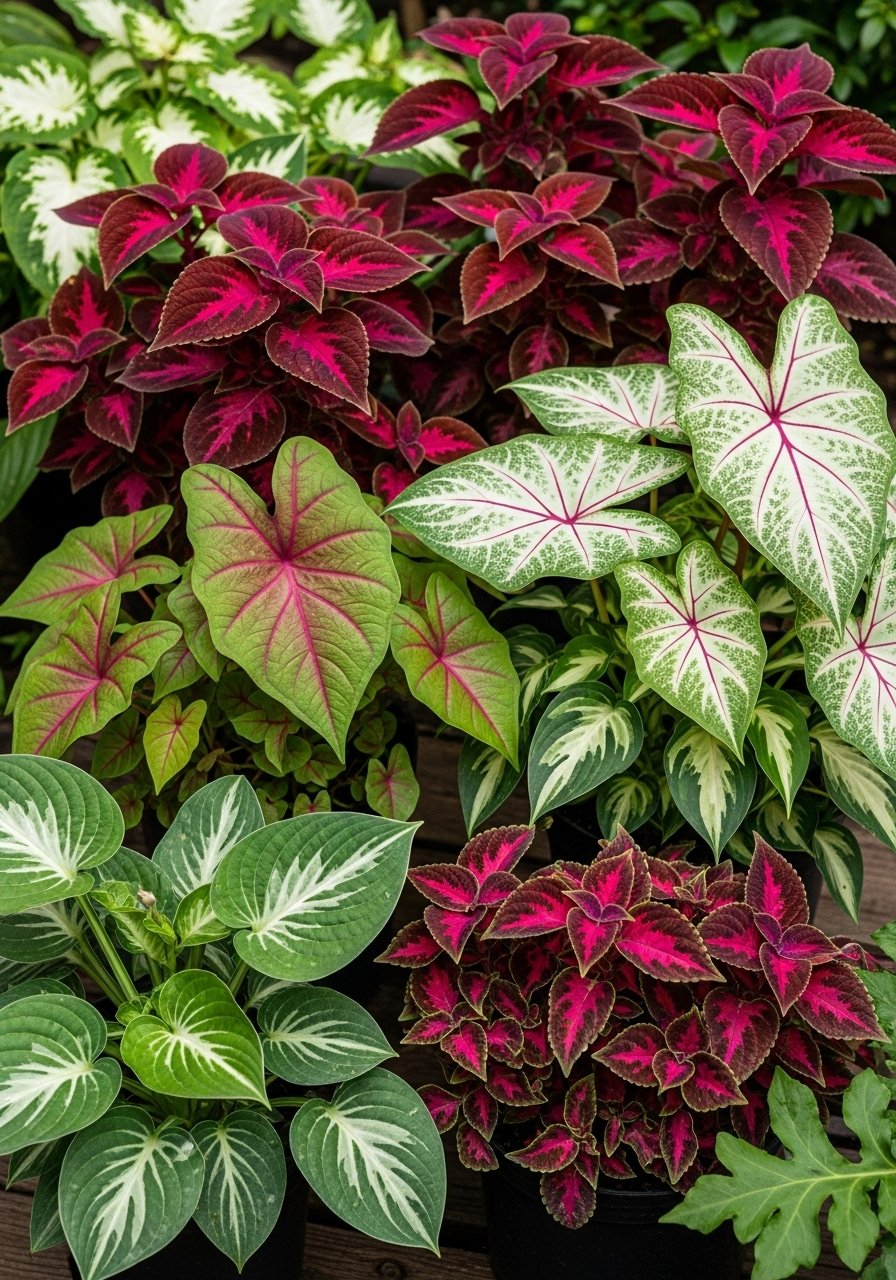
I stopped chasing blooms and embraced foliage. Bold leaves provide drama and keep the porch interesting even in off-season. Coleus and caladiums pop in shady entries where flowers often fail.
Foliage pots are forgiving; they hide tired blooms from other areas. One slip I made was over-fertilizing coleus—leaves got leggy. Feed sparingly and pinch to keep compact.
They’re great for contrast next to flowering pots.
What You’ll Need for This Look
13. Lantern-Lit Pots for Evening Curb Appeal
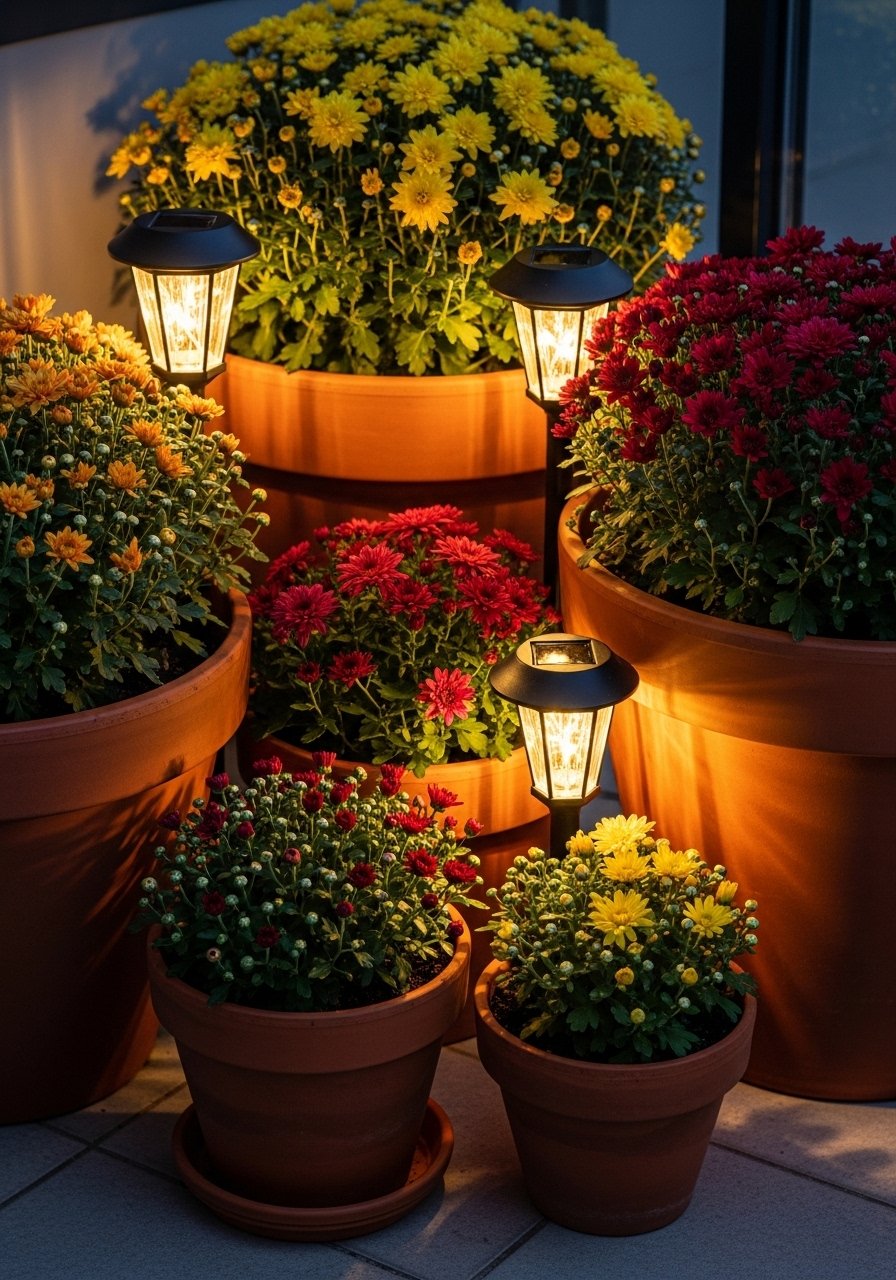
I started adding small solar lanterns in pots after dark felt neglected. Warm light from lanterns makes the porch inviting and shows off foliage textures at night. I used cheap stake lights once and they failed—invest in a small solar lantern.
Position lights low and tuck them toward the pot’s edge to avoid glare. It’s an easy way to add personality without rewiring.
Charge them in full sun for best results.
What You’ll Need for This Look
14. Shade-Loving Ferns for a Lush, Cool Porch
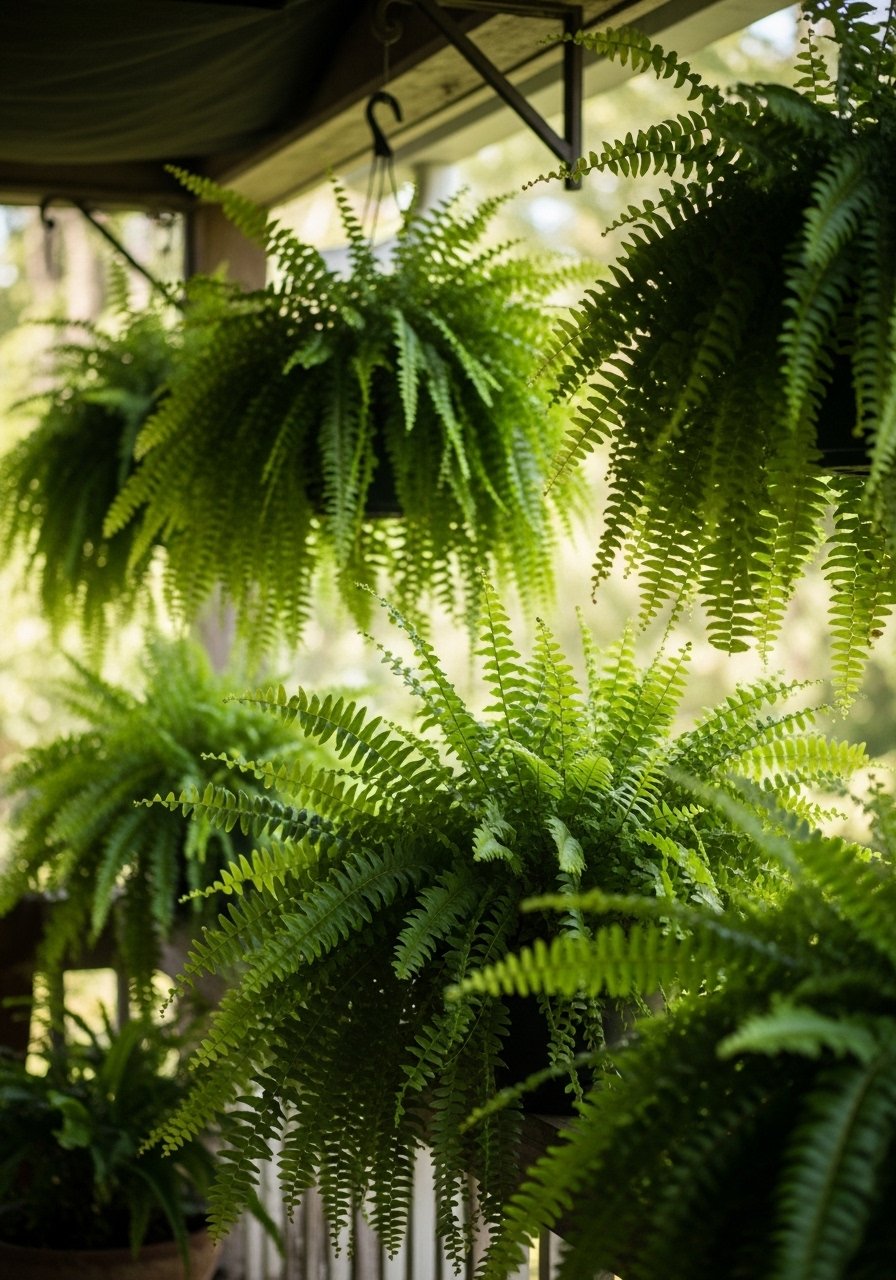
I moved a pot of ferns under the overhang and it became the porch’s soft corner. Ferns tolerate low light and make entrances feel shaded and calm. I once left a fern in bright sun—its fronds burned badly.
They need humidity and regular misting if your porch is dry. Pair with a ceramic pot that holds moisture.
Ferns reward attention with lush texture and longevity.
What You’ll Need for This Look
15. Compact Conifer Trio for Structured, Year-Round Appeal
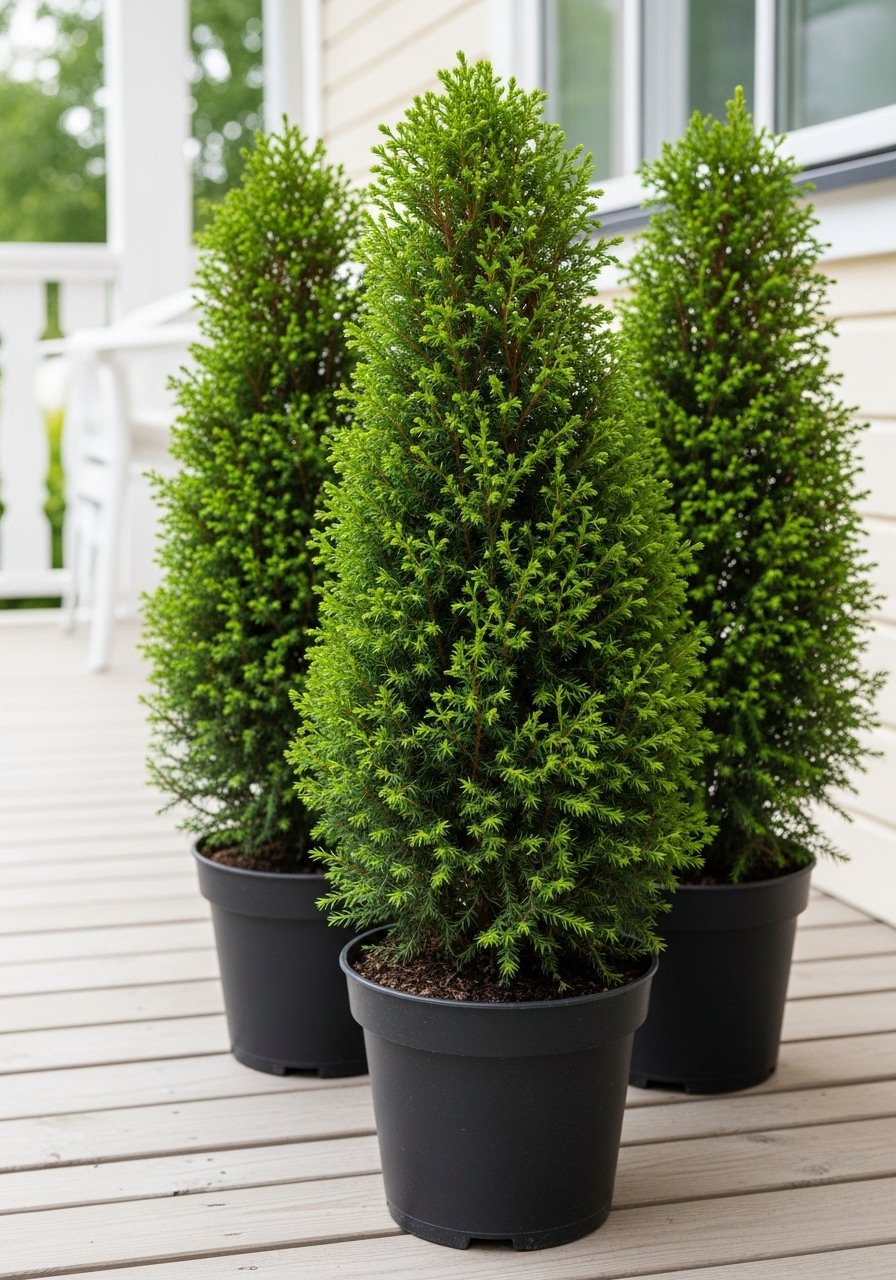
I planted a trio of compact conifers once and they grew into a tidy, year-round anchor. The structure gives a formal, grounded look without fuss. Early on I planted one too close to the wall and had trimming to do—space matters.
Use conifers with different textures to avoid monotony. They’re slow-growing and forgiving of neglect once established.
Water well the first two seasons to encourage roots.
What You’ll Need for This Look
16. Small Bench with Planters for a Friendly Entrance
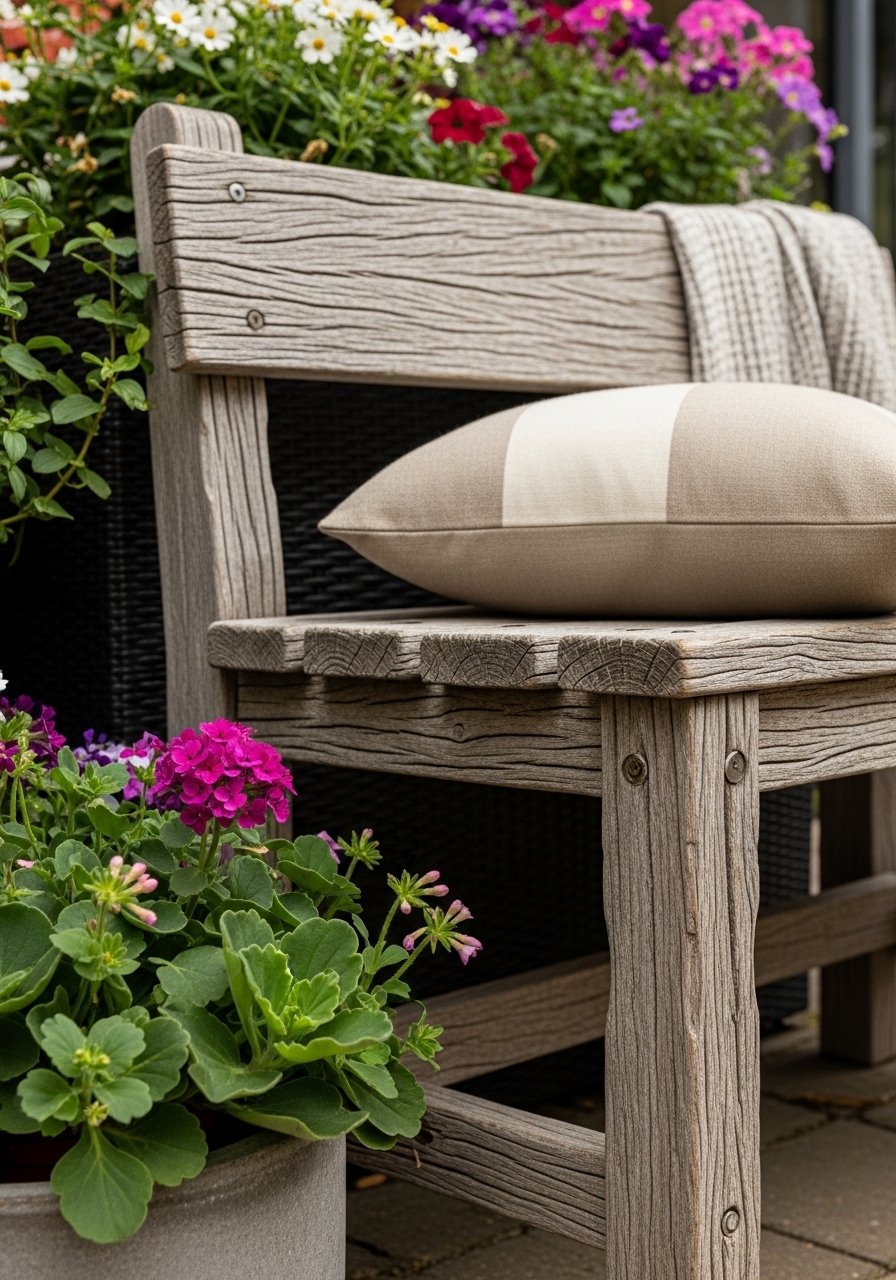
I added a bench and flanking planters and suddenly the porch read as a place to sit, not just pass. The bench anchors the display and makes the pots feel intentional. I once left seating without shade and the paint faded quickly—add a cushion or cover.
Choose low pots so people can still sit comfortably. It’s an easy way to create a welcoming moment.
Secure planters so they don’t tip when someone sits down.
What You’ll Need for This Look
17. Window-Box Pansies for Front Window Charm
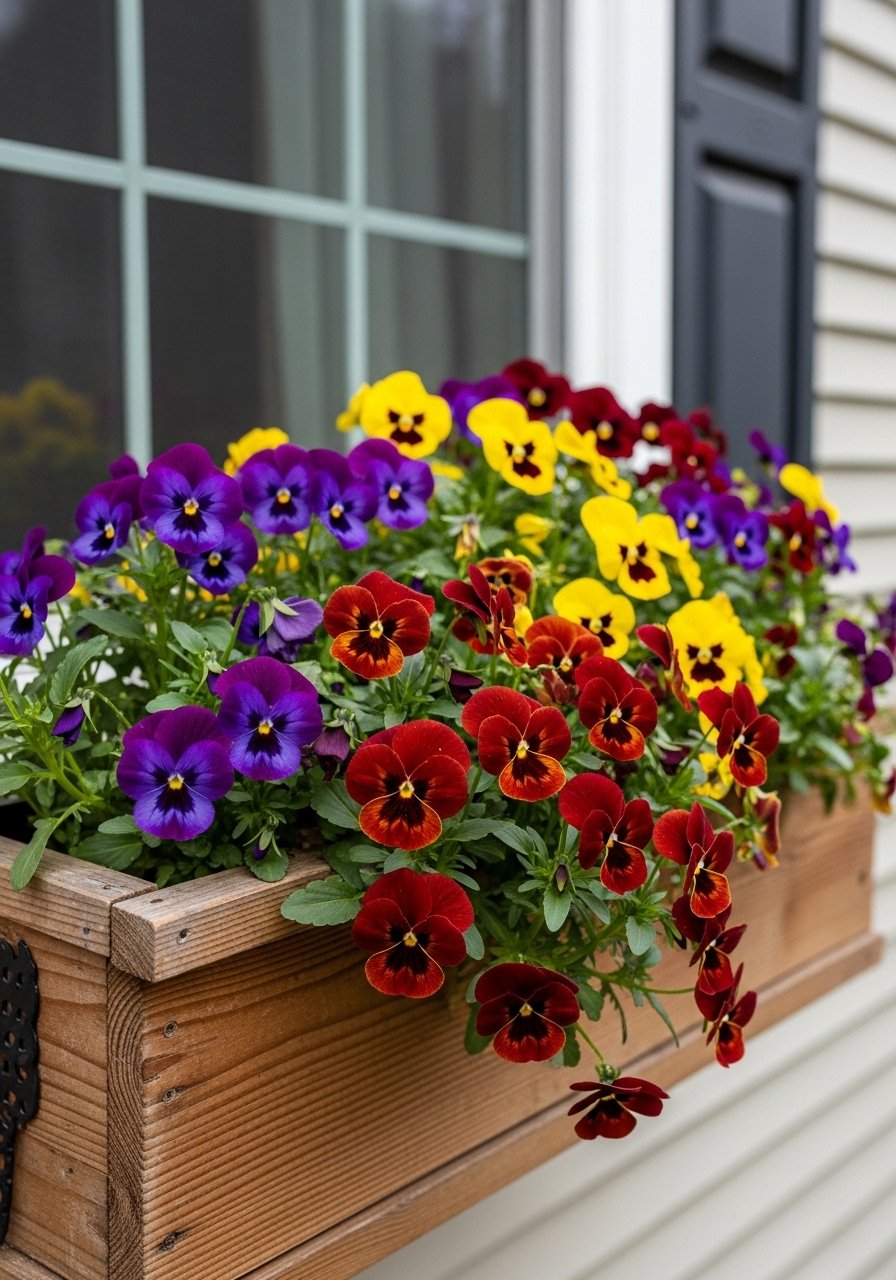
I added a window box and watched the house gain instant friendliness. Pansies work well in cool weather and give a classic cottage vibe. I overwatered once and lost a few—use a well-draining mix in window boxes.
Window boxes are visible from street and make small porches look polished. Secure brackets and consider drip irrigation if you travel.
Trim spent flowers to keep the display tidy.
What You’ll Need for This Look
18. Bold Color-Blocked Pots for Graphic Impact
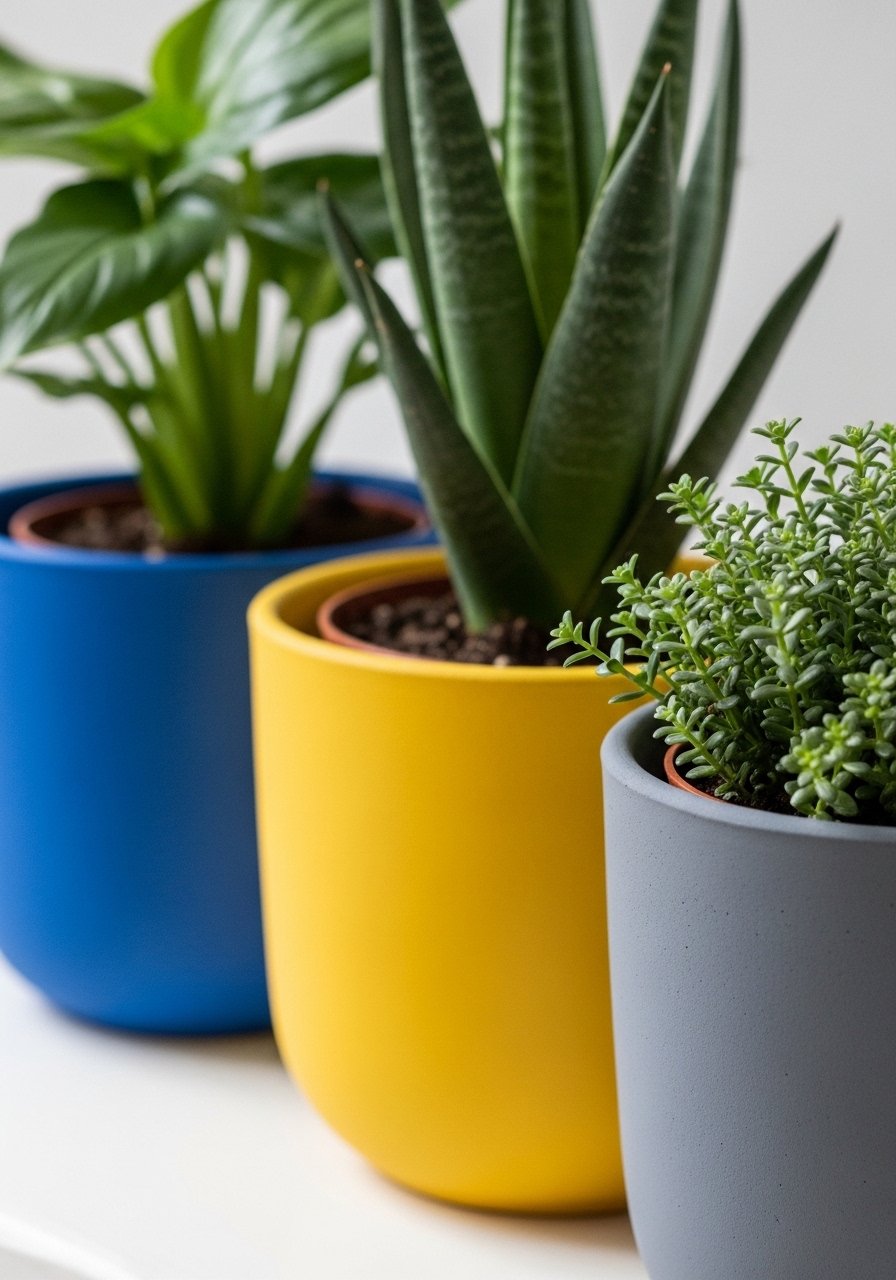
I painted a few old pots in bold, solid colors and grouped them for a graphic look. Using one plant type per pot keeps it modern and tidy. I once paired too many contrasting patterns—stick to two or three colors.
This works great when the house palette is neutral. Choose durable outdoor paint and seal to prevent chipping.
It’s a small DIY that yields a big visual payoff.
What You’ll Need for This Look
- Outdoor planter spray paint (assorted colors)
- Single plant variety plugs (per pot)
- Outdoor clear sealer for pots
19. Recycled Metal Buckets for Rustic Appeal
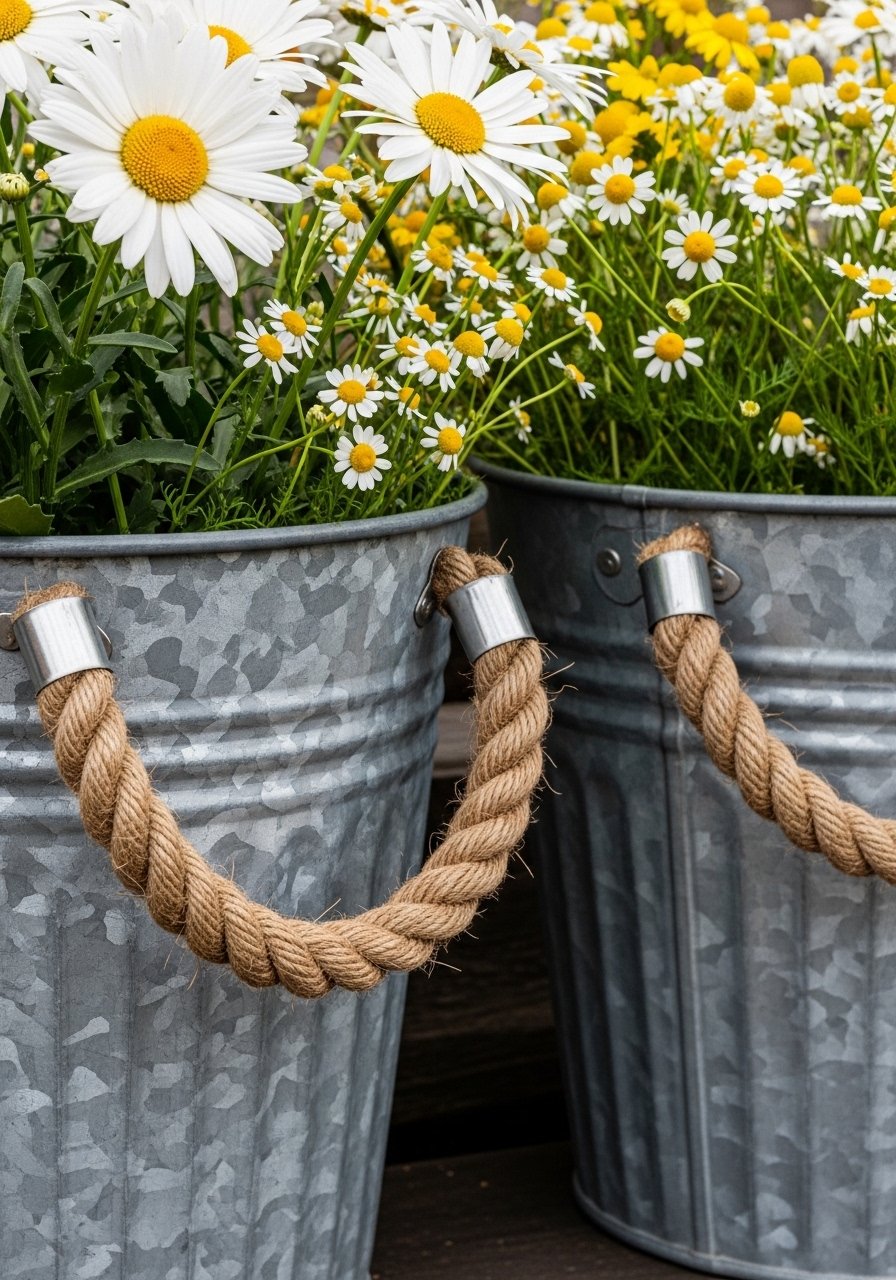
I loved the thrifted look of metal buckets and converted a few into planters. They weather nicely and feel lived-in. I did forget to add drainage once and learned to drill holes before planting.
Use hardy, forgiving annuals like daisies or chamomile. Line the bottom with gravel for extra drainage if you worry about rust.
Buckets are light on the budget and heavy on character.
What You’ll Need for This Look
20. Trailing Ivy Columns Along a Railing
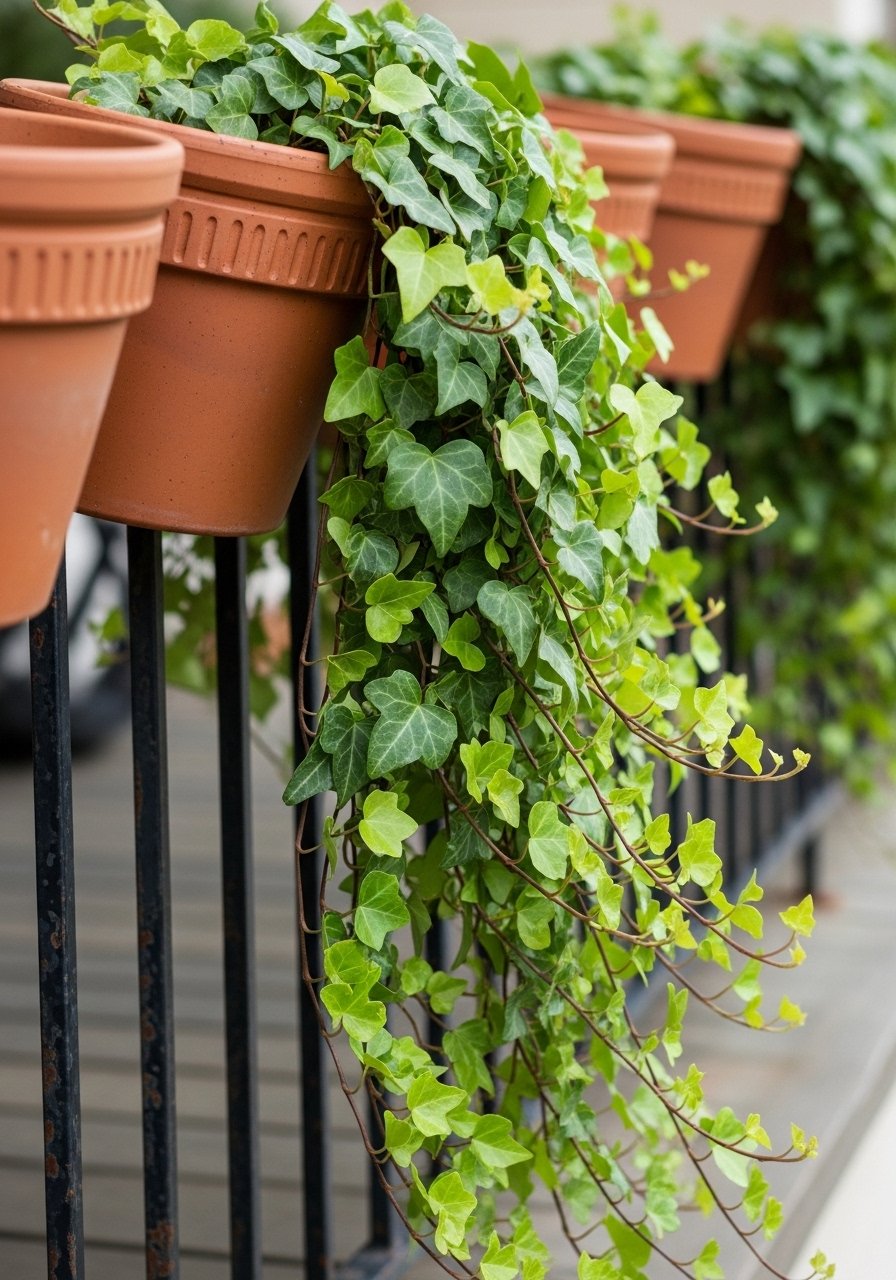
I planted trailing ivy in small pots clipped to the railing and watched the porch gain a soft, green curtain. Ivy bridges gaps and makes a porch feel private. I once let it grow unchecked and it began to cling where I didn’t want it—trim regularly.
This is low-effort but needs monitoring. Use small trellis clips to guide growth and reduce root crowding.
Ivy looks especially good in simple, neutral pots.
What You’ll Need for This Look
21. Twilight Pots with Subtle LED Strips for Soft Glow
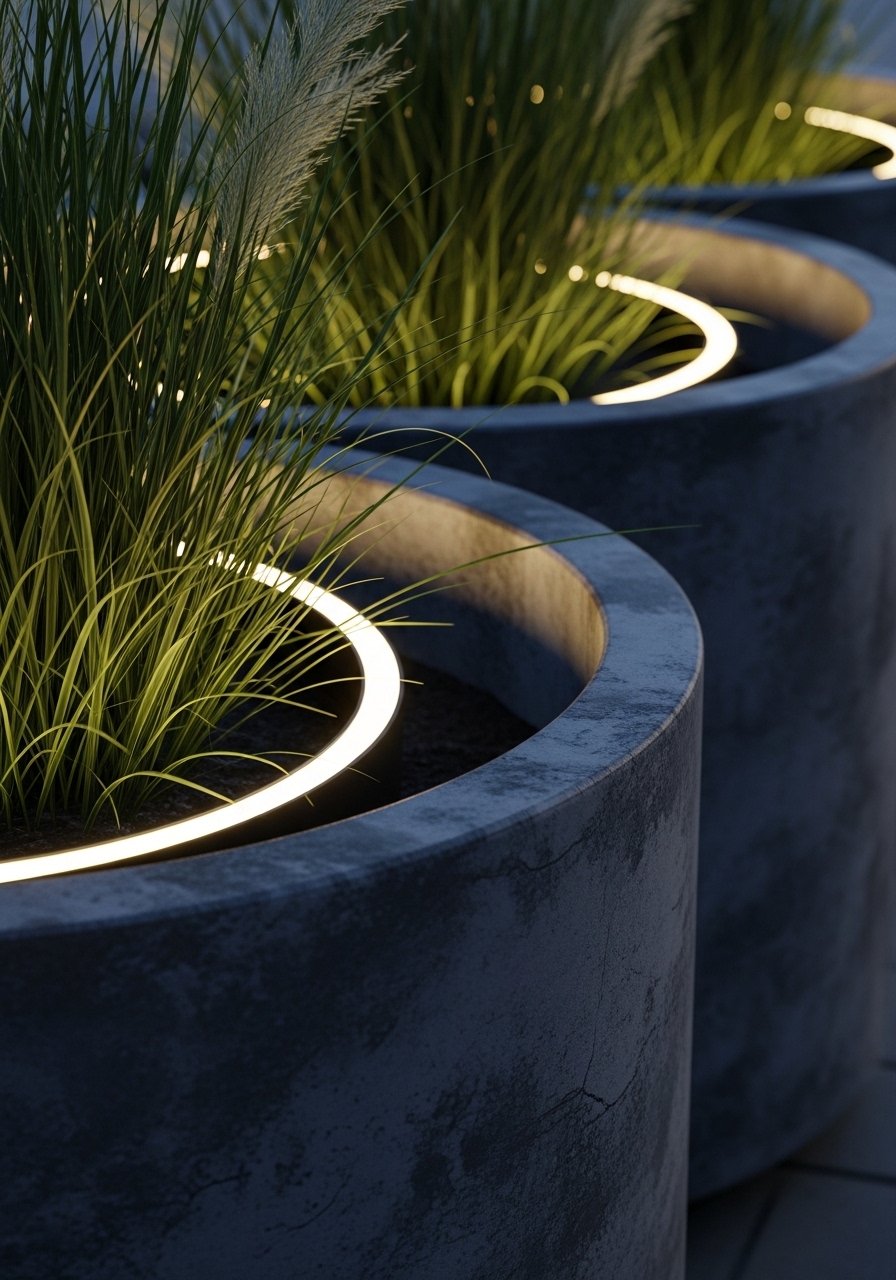
I wired a few low-voltage LED strips under the lip of large pots and the porch gained a gentle, architectural glow. It’s subtle and highlights textures without glaring. I had one strip rated for indoors that failed after rain—use waterproof outdoor-rated strips.
Position lights to shine down into plants, not at visitors’ eyes. It’s practical and cozy for evening arrivals.
Keep wiring neat and secure away from water sources.
What You’ll Need for This Look
Final Thoughts
You don’t need all 21 looks—pick one or two that match your porch and routine. I’ve used these in small houses and big entries; the same basic choices work everywhere.
Start small, accept a few mistakes, and build a porch that feels like part of your home.
Leave a Reply