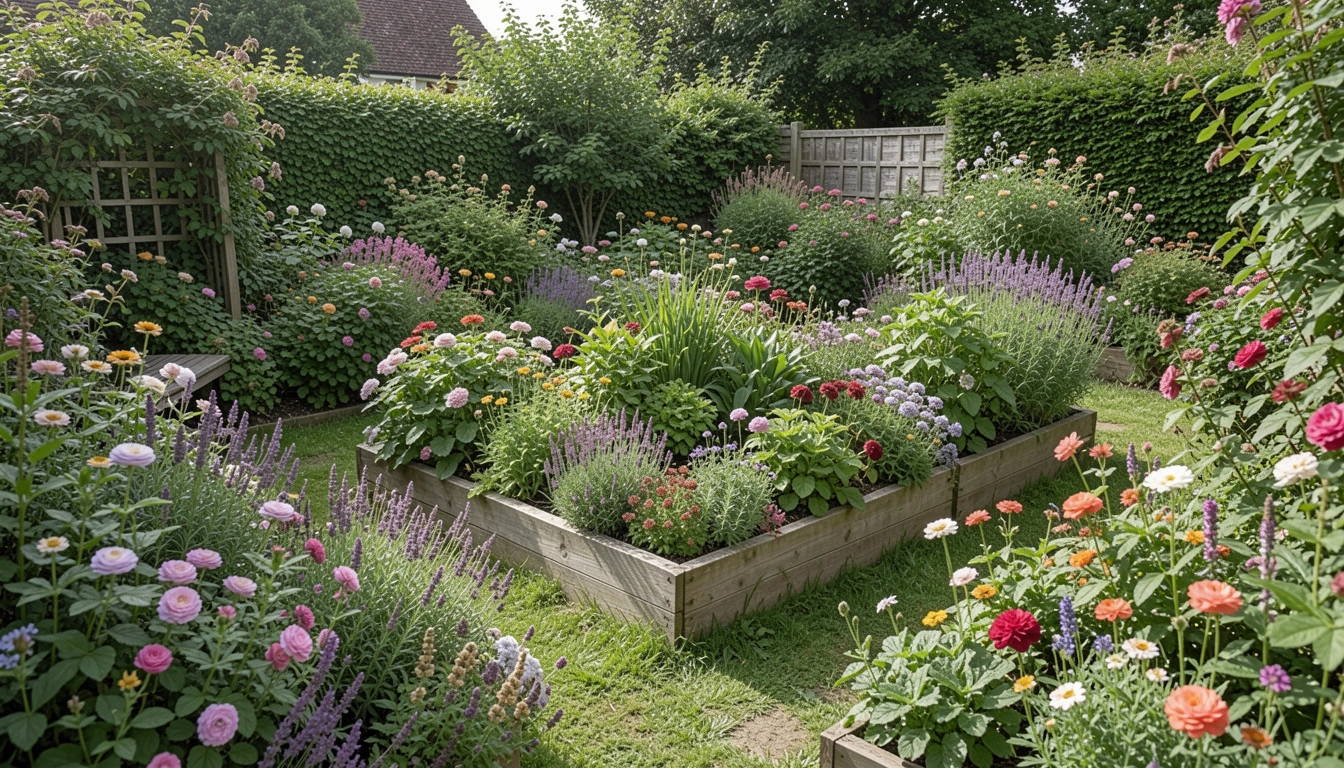
I stared at that empty corner in my flower garden. It felt wrong—too open, pulling the eye away from the rest. Plants nearby looked crowded while this spot sat bare.
I tried filling it with whatever was handy. Still off. The garden needed something contained, something square to hold it together.
One afternoon, I squared it off. Now it anchors the space. Steady. Balanced.
How To Make Square Bed In Flower Garden
This shows you how I create a square bed that settles into a flower garden. It feels right from day one. Ends up clean and intentional.
What You’ll Need
- 12-inch galvanized steel landscape edging
- 4×8-inch concrete pavers in gray
- Organic compost mix, 40-pound bag
- Hardy lavender plants, 1-gallon size
- Dwarf coreopsis perennials, 6-pack
- Pine bark mulch, 2-cubic-foot bag
- Hand trowel with wooden handle
- Natural jute garden twine, 100-foot spool
Step 1: Mark the Square Footprint
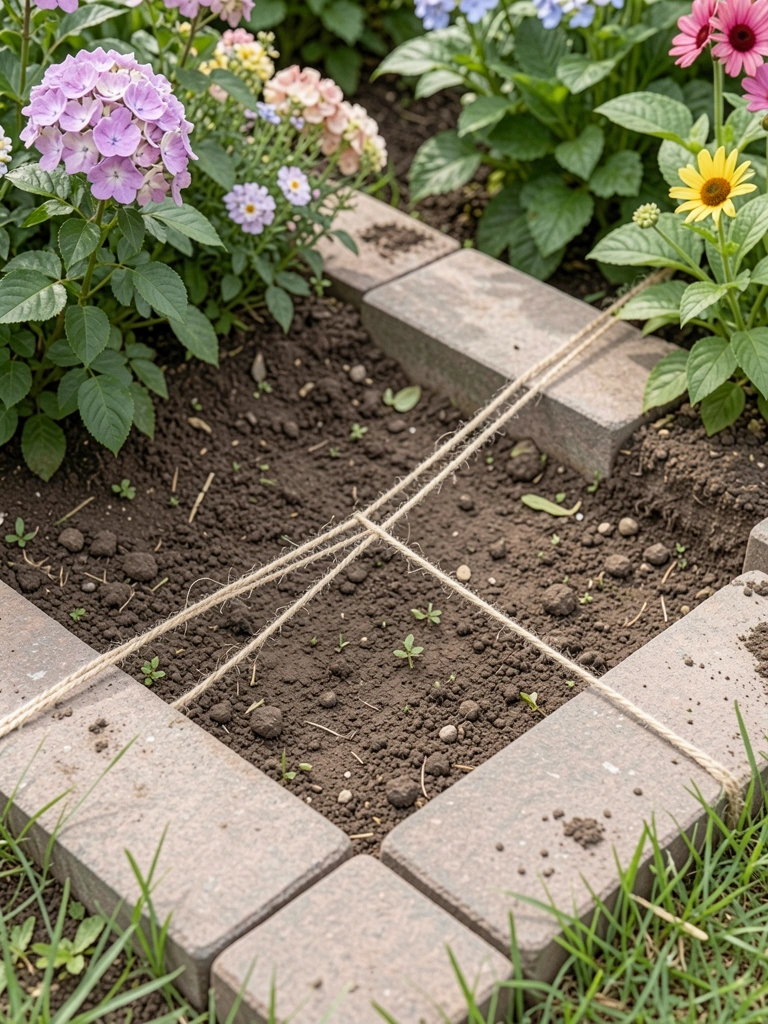
I pick a spot where the garden feels thin. Eye it from the path—does it balance the curves around it? I stretch jute twine into a 4-foot square. Stake the corners lightly.
Visually, the lines snap everything into place. The openness shrinks. It promises structure.
Most miss how the square echoes nearby paths. Avoid stretching twine too tight over roots—it shifts later.
I step back. Feels steady already.
Step 2: Set the Edging Frame
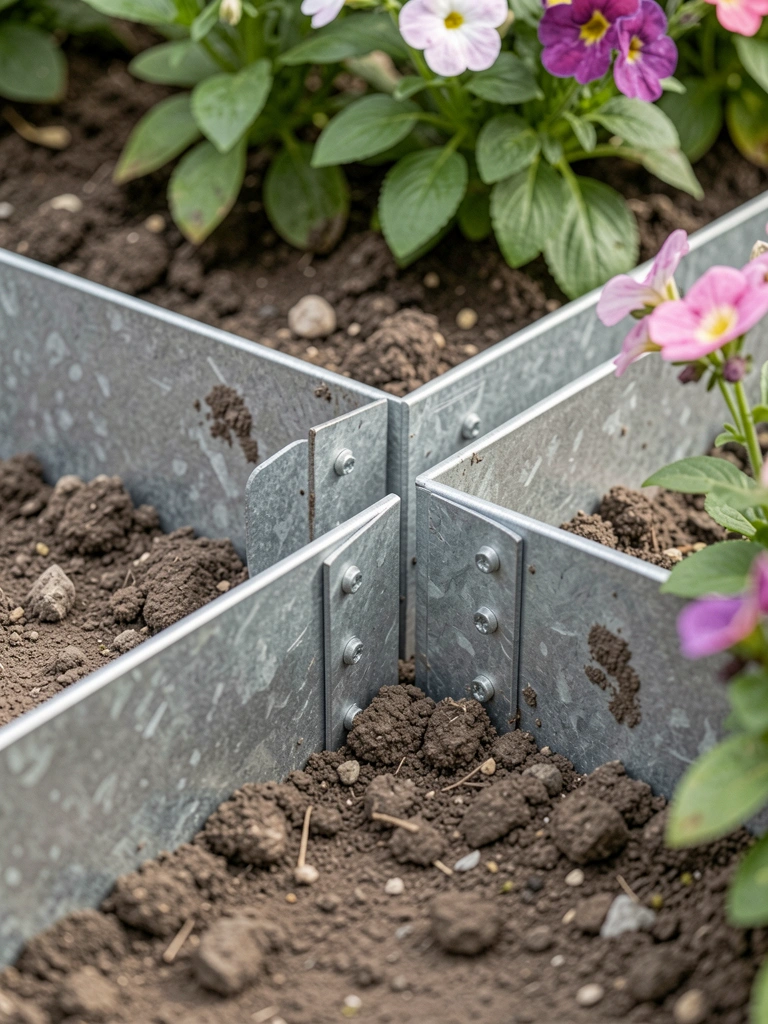
I dig a shallow trench along the twine. Slide in the galvanized edging, overlapping corners just so. Tap it level with my boot.
Now the bed holds shape. Edges contain the soil, make it feel like its own room amid the flowers.
People forget to check level from all sides. Uneven edging warps the square over time—use your trowel to nudge.
It sits there, waiting. Balanced against the garden's flow.
Step 3: Build Up the Soil Base
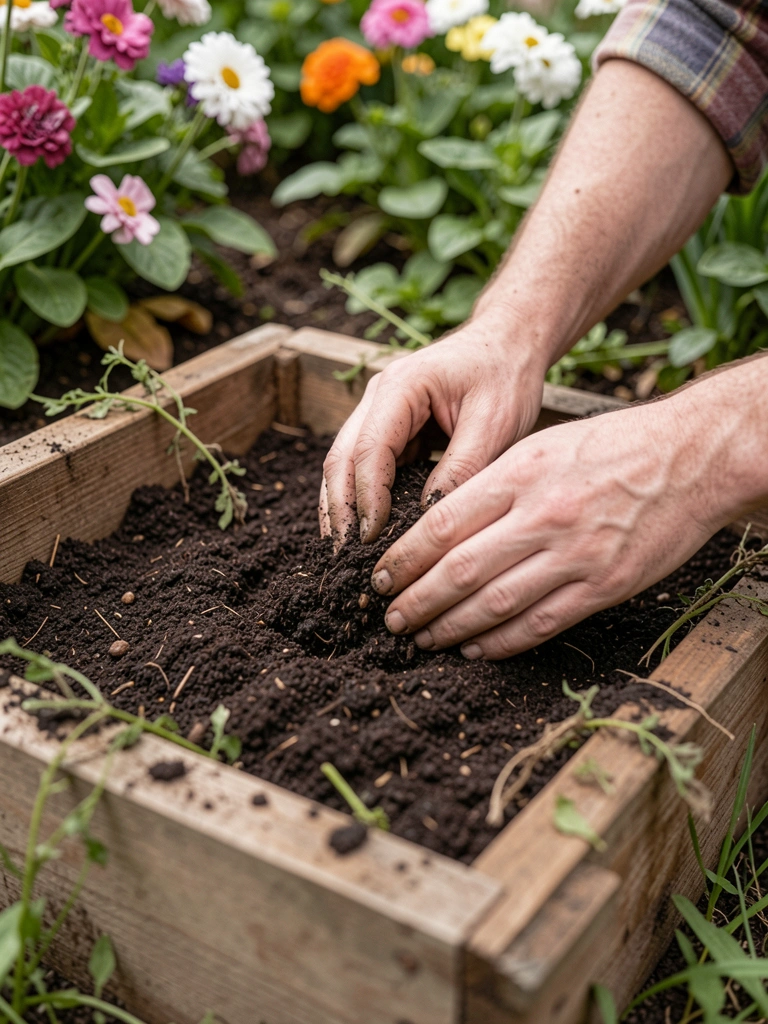
I loosen the soil inside. Mix in compost until it's rich, dark. Pat it flat, about 8 inches deep.
The bed lifts slightly. Color deepens, draws the eye in warmly. Ready for plants.
Insight: Soil settles uneven without compost bulk. Skip it, and plants lean. Don't overpack—let it breathe.
From here, it blends with surrounding beds. Comfortable.
Step 4: Place Anchor Plants First
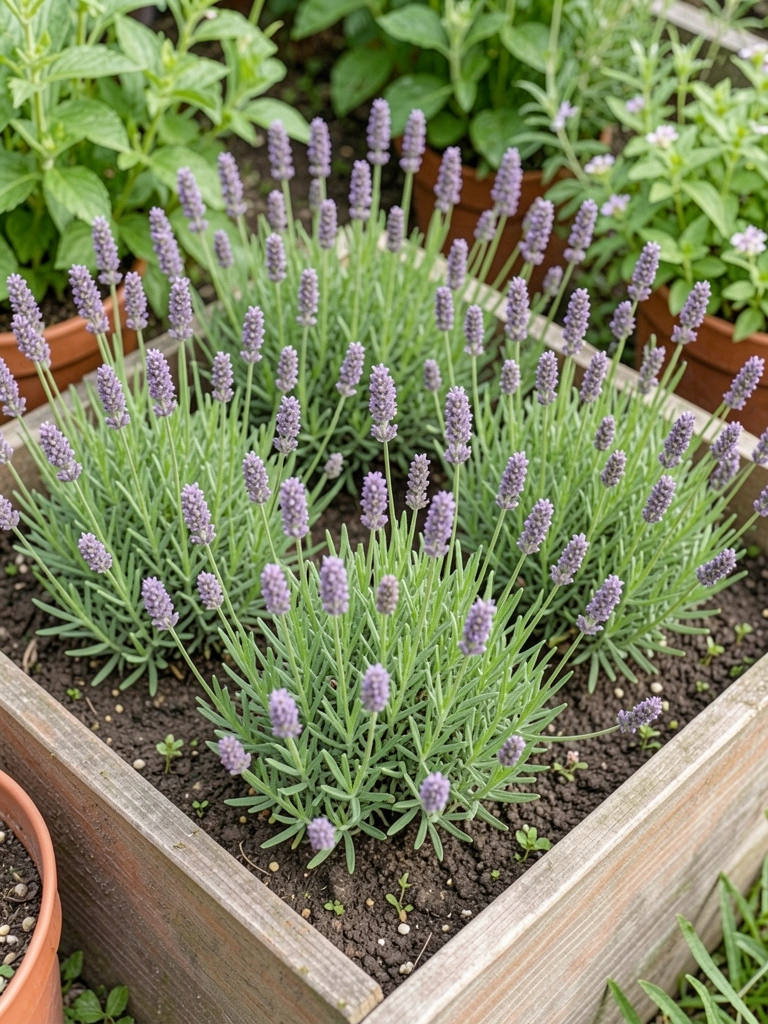
I set lavender at the corners. Eyeball distances—even, not crammed. They root deep, hold the square firm.
Visually, corners ground it. The bed gains height, pulls the garden together.
Missed often: Anchors need space to spread. Too close, they crowd fillers. Avoid facing tall ones north—shadows unbalance.
Step back. It feels planted, not empty.
Step 5: Fill and Mulch for Finish
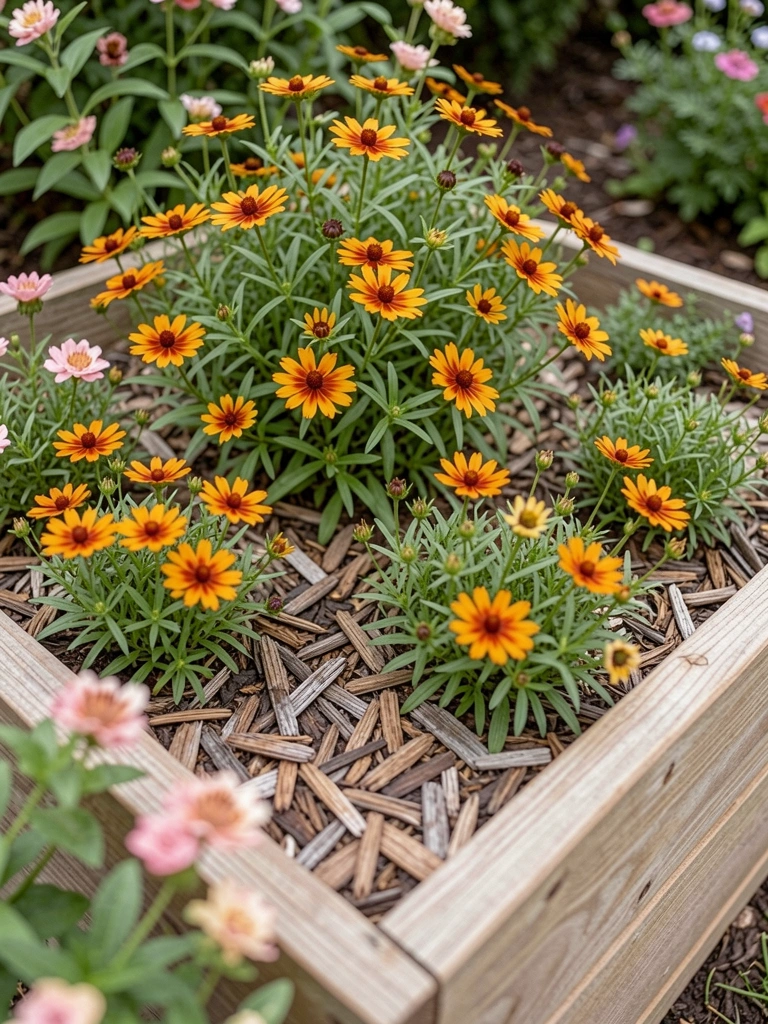
Tuck coreopsis between lavenders. Low and bright. Spread mulch thin, right to the edging.
Now it's layered. Textures mix—soft blooms over bark. Settles into the garden like it grew there.
Common slip: Mulch too thick hides plants. Keep it light. The square frames the flowers perfectly.
Whole thing flows. Intentional.
Choosing Plants That Fit the Square
I stick to plants under 2 feet tall for squares. They stay neat.
Lavender corners repeat nearby. Coreopsis echoes yellows elsewhere.
- Match heights to bed size
- Repeat colors from garden paths
- Pick perennials for low upkeep
This keeps it balanced year-round.
Keeping the Edges Crisp Over Time
Edges blunt after rain. I nudge them yearly with a trowel.
Weeds creep in corners. Pull early.
- Trim plants touching edging
- Refresh mulch in spring
- Check square from path view
Feels clean longer this way.
Adjusting for Your Garden's Light
My square gets afternoon sun. Yours might differ.
Observe shadows first. Shift plants if needed.
- Full sun: Lavender thrives
- Part shade: Swap to hostas
- Test one plant before all
It adapts, stays comfortable.
Final Thoughts
Start with a small 3-foot square if unsure. Watch it settle.
You've got this—gardens forgive tweaks.
Mine anchors the corner now. Simple balance. Yours will too.
Leave a Reply