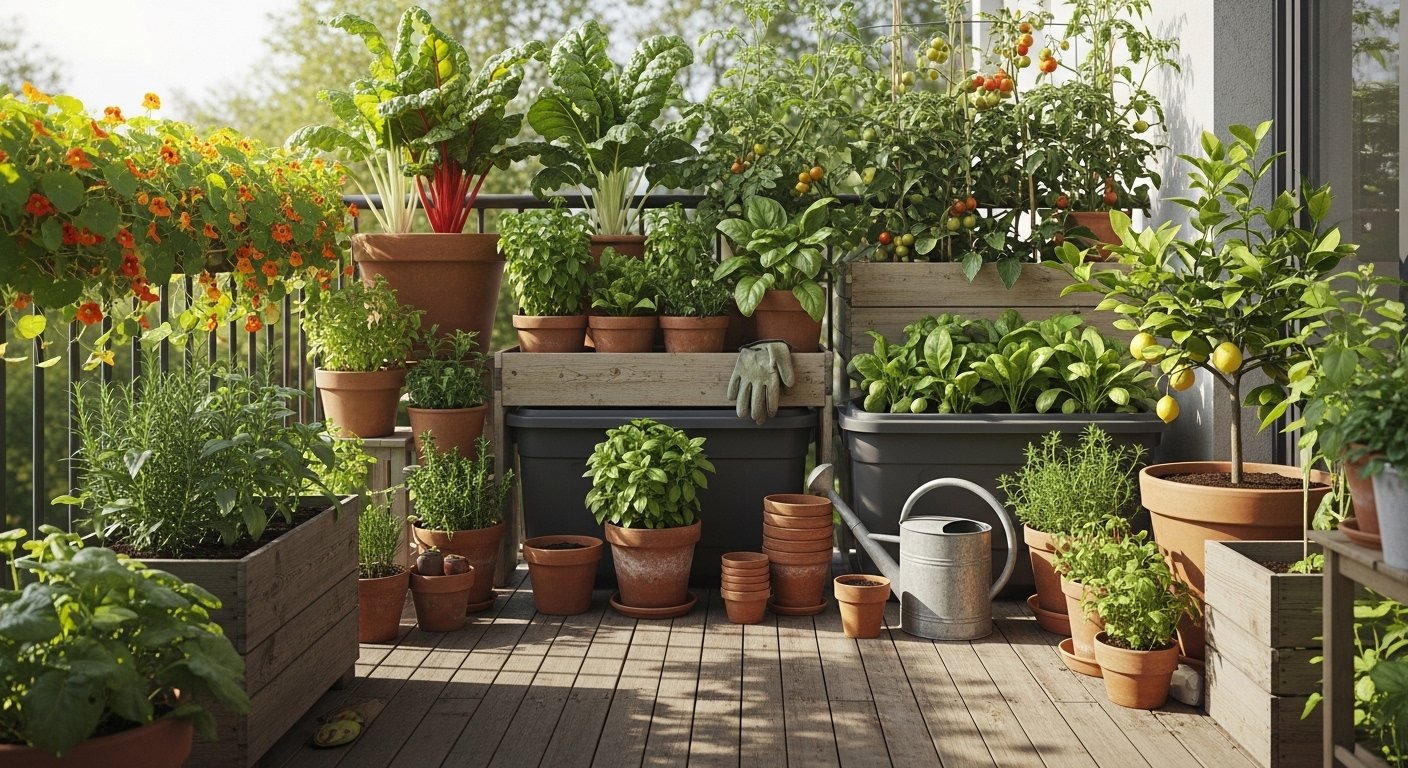
I stared at my empty balcony last spring. Windy, shaded in spots, too narrow for rows. Veggies I'd planted before got leggy and fell over. Nothing grew right.
It felt off. Like the space fought back.
Then I shifted how I approached it. Placement first. Feel over force.
How To Grow Vegetables In Balcony Garden
This guide shows you how to set up a balcony that grows steady vegetables. You'll end up with fresh greens and tomatoes that actually produce. It's straightforward from my own tries.
What You’ll Need
- 15-gallon fabric grow bags for root veggies
- Organic potting mix for vegetables, 2 cubic feet
- Cherry tomato seedlings in 4-inch pots
- Loose leaf lettuce seeds, 100-pack
- Adjustable metal trellis, 5 feet tall
- Compost starter, 1 gallon bucket
- Drip irrigation kit for balconies, 50 feet
- 5-inch plastic saucers for pots
Step 1: Map Your Balcony's Light and Wind
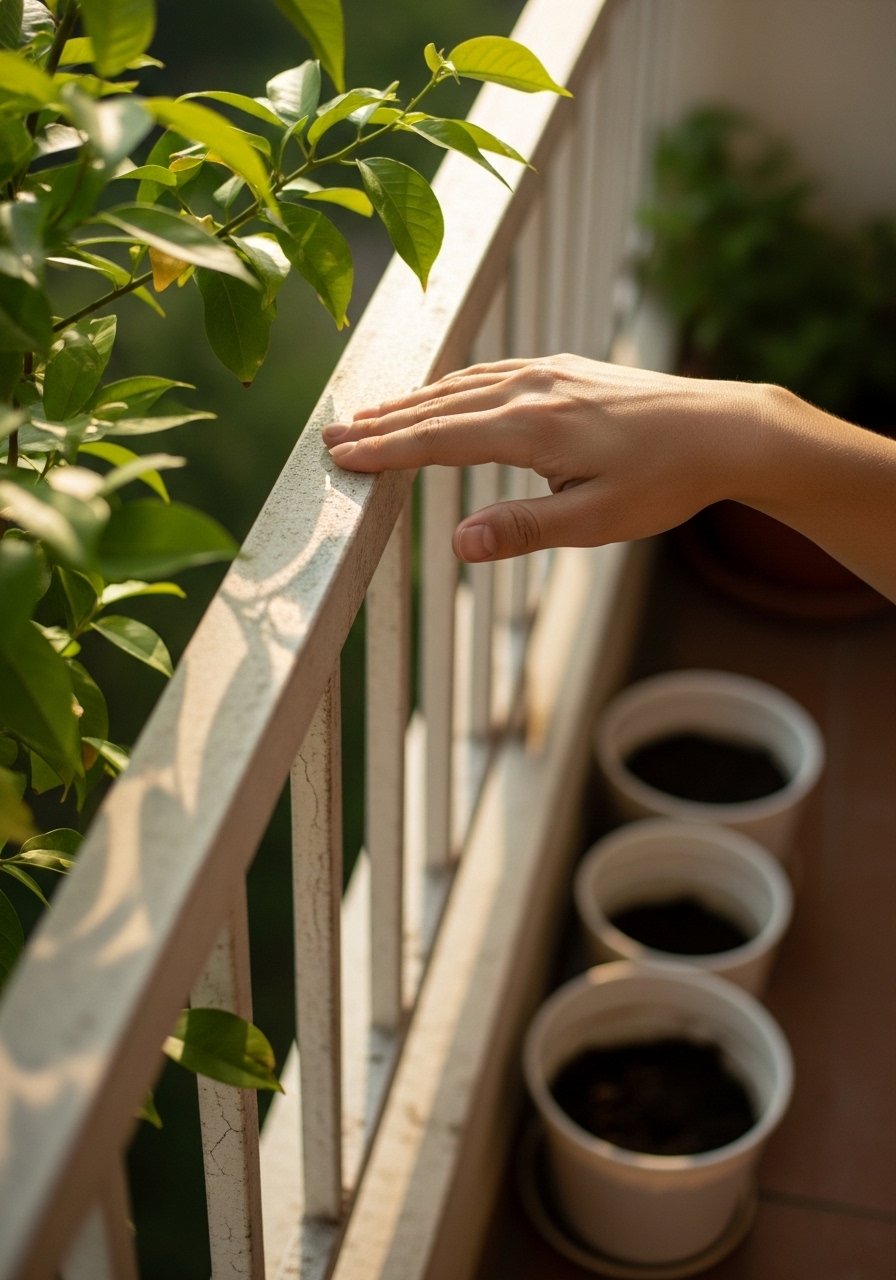
I walk my balcony at dawn and noon. Note where sun lingers longest. Wind hits corners hardest.
This sets the feel. Tomatoes go south-facing, fullest light. Lettuce tucks in partial shade. Visually, it balances—tall plants block gusts for shorter ones.
People miss how light shifts monthly. Check now. Avoid cramming everything in one spot; it crowds airflow.
One mistake: Ignoring railings. Lean pots against them for stability.
Step 2: Group Containers by Height and Need
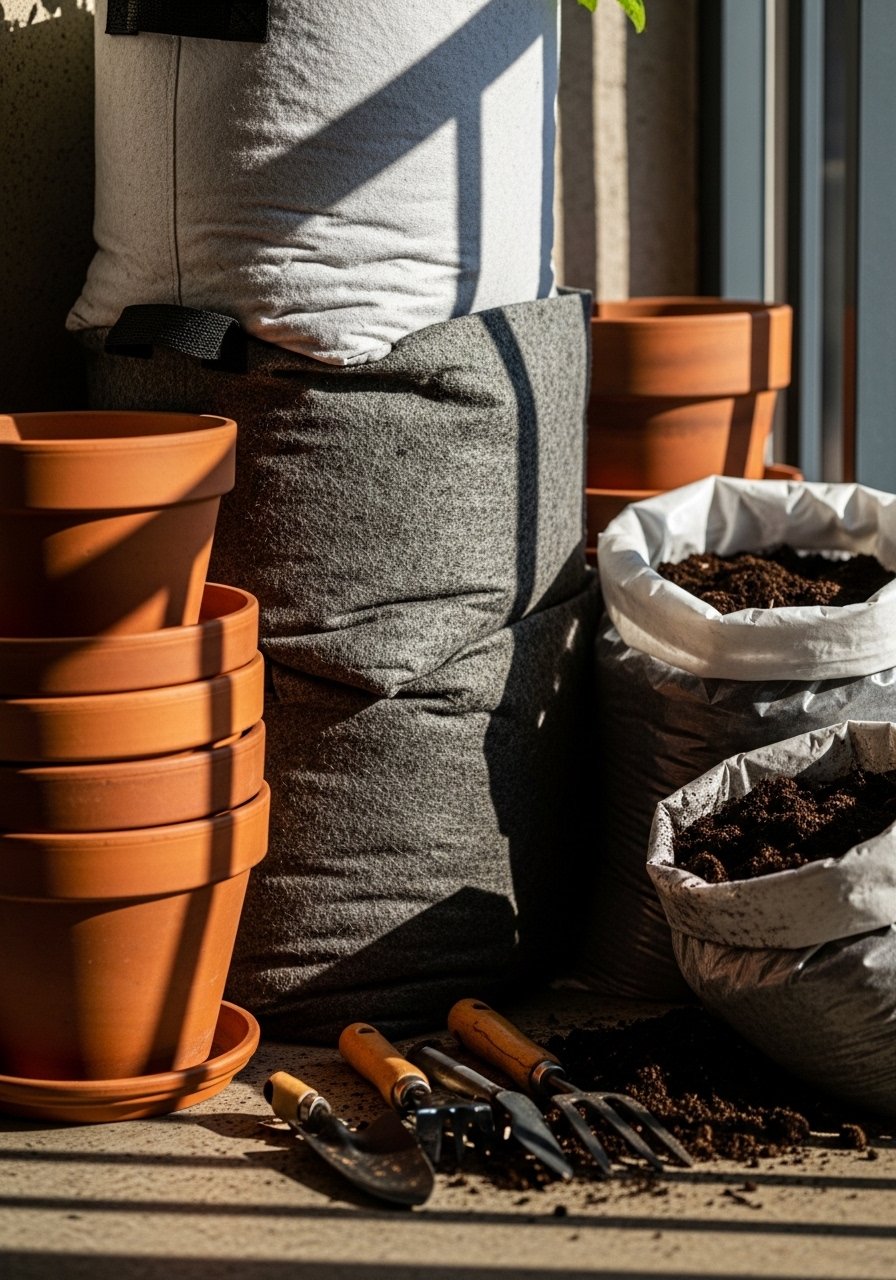
I sort pots by plant size. Tall trellised tomatoes anchor the back. Low lettuce fills front edges.
It creates flow. Space breathes between groups. Wind passes through.
Insight: Match water needs here. Deep bags for roots hold moisture; saucers catch drips.
Don't overload one side. It tips the balance, feels heavy.
Step 3: Fill and Plant for Root Room
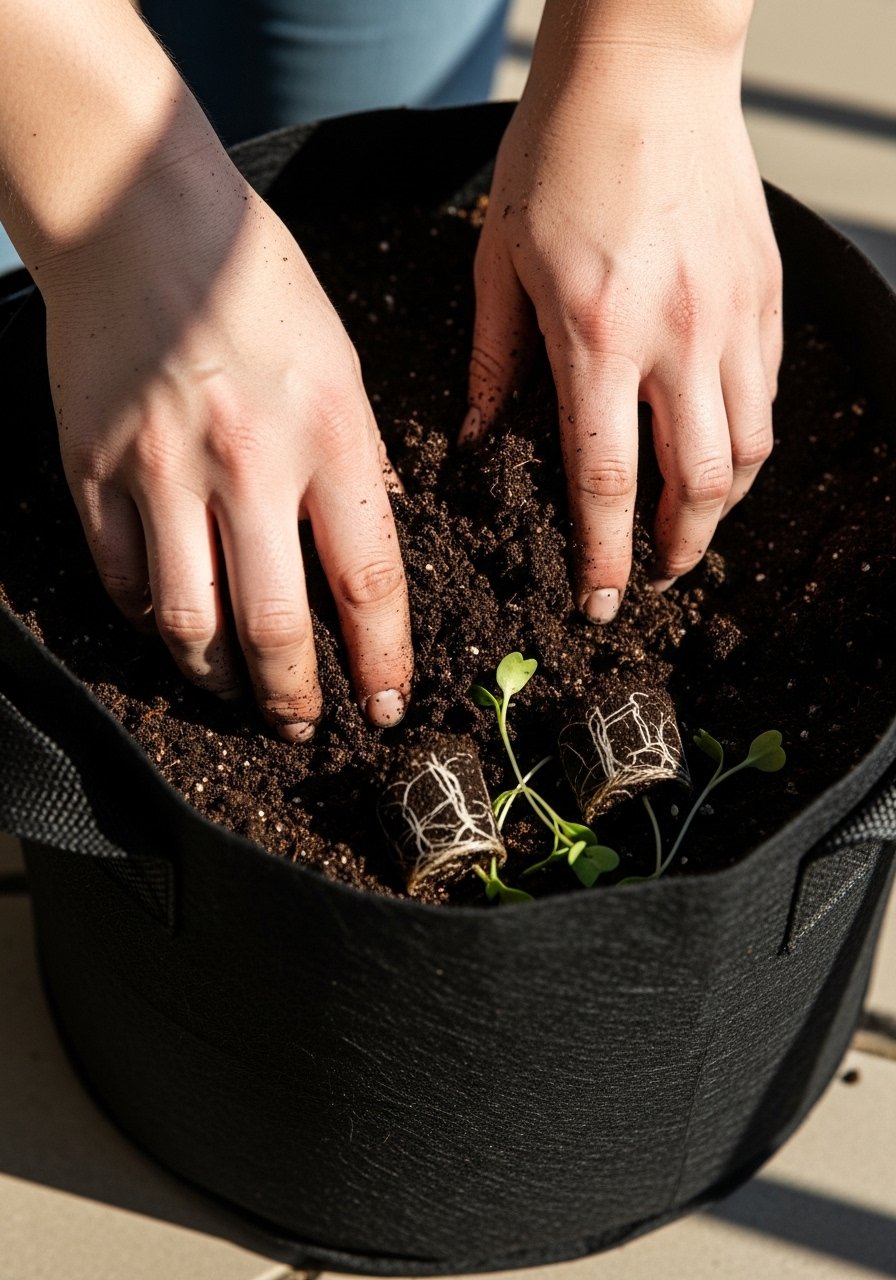
I mix potting soil with compost. Fill bags loose, not packed. Plant seedlings deep, roots spread.
Ground settles comfortable. Plants root down steady. Greens pop greener already.
Missed often: Overfill bags. Leaves no room to grow.
Skip patting soil hard. Let it breathe.
Step 4: Set Up Support and Water Flow
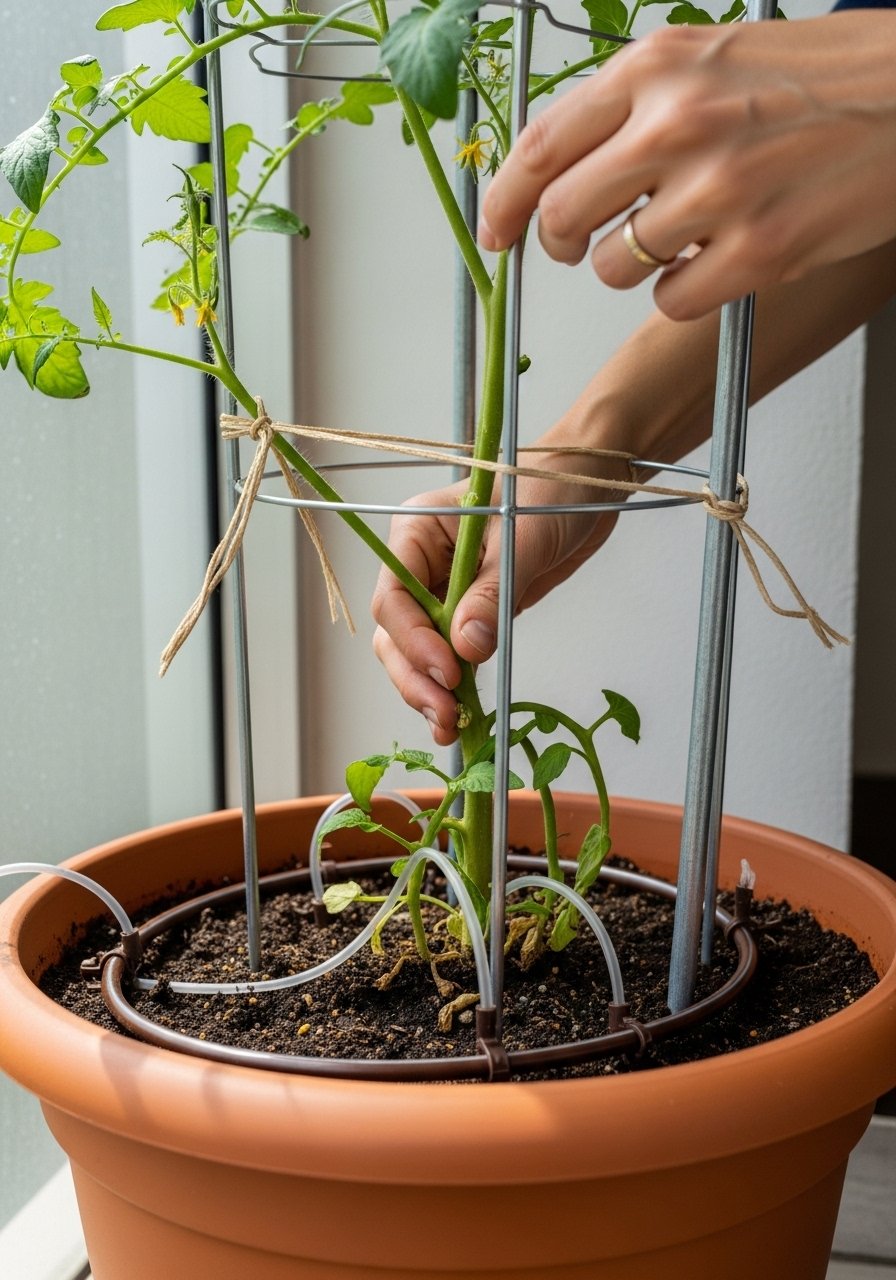
I clip trellis behind climbers. Run drip lines low to high, even coverage.
Vines reach up balanced. Water hits roots, not leaves. Less rot.
People forget ties loosen. Check weekly.
Avoid pooling water. Saucers prevent slips.
Step 5: Watch and Adjust Placement Weekly
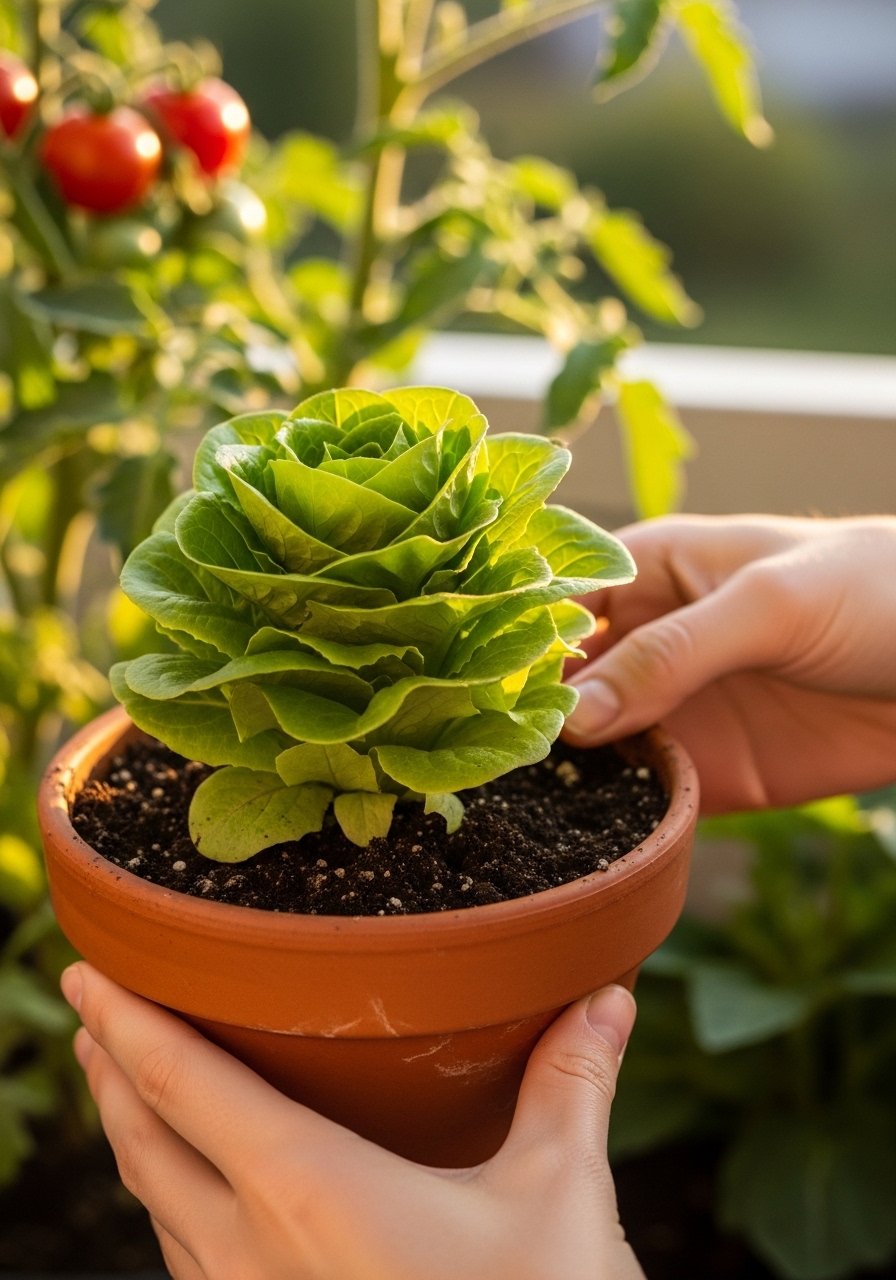
I eye the setup Sundays. Swap pots if one shades another. Trim early yellow leaves.
Growth evens out. Whole balcony greens up intentional.
Insight: Wind bends tell direction. Move frail plants.
Don't ignore lean. Straighten young stems gentle.
Best Vegetables for Small Balconies
Cherry tomatoes climb easy. They fruit heavy without sprawling.
Lettuce and radishes fill gaps fast. Herbs like basil tuck anywhere.
- Tomatoes: South light, trellis up.
- Lettuce: Shade tolerant, cut-and-come-again.
- Peppers: Compact, steady producers.
From my rail, these fit without crowding.
Handling Wind and Pests Naturally
Wind dries soil quick. I cluster pots, use walls as shields.
Pests show on undersides. Hose blasts gentle.
- Check leaves daily.
- Neem spray if needed, diluted.
- Companion plant basil near tomatoes.
Keeps things clean, no chemicals.
Year-Round Balcony Tips
Winter, swap to kale. Hardy in pots.
Summer heat? Shade cloth over peaks.
Mulch tops with straw. Holds moisture even.
Rotate spots yearly. Soil stays fresh.
Final Thoughts
Start with three pots. One tomato, two greens.
You'll see produce by month two. It builds quiet confidence.
Your balcony grows into something reliable. Just tend steady.
Leave a Reply